
Cath A. September 24th, 2026
How to Modernize a Mediterranean Home Without Losing It's Warmth
The best Mediterranean renovations don't erase the past.
They edit it keeping the arches, texture, natural materials and warmth while making the home lighter, calmer and better suited to the way we live now.
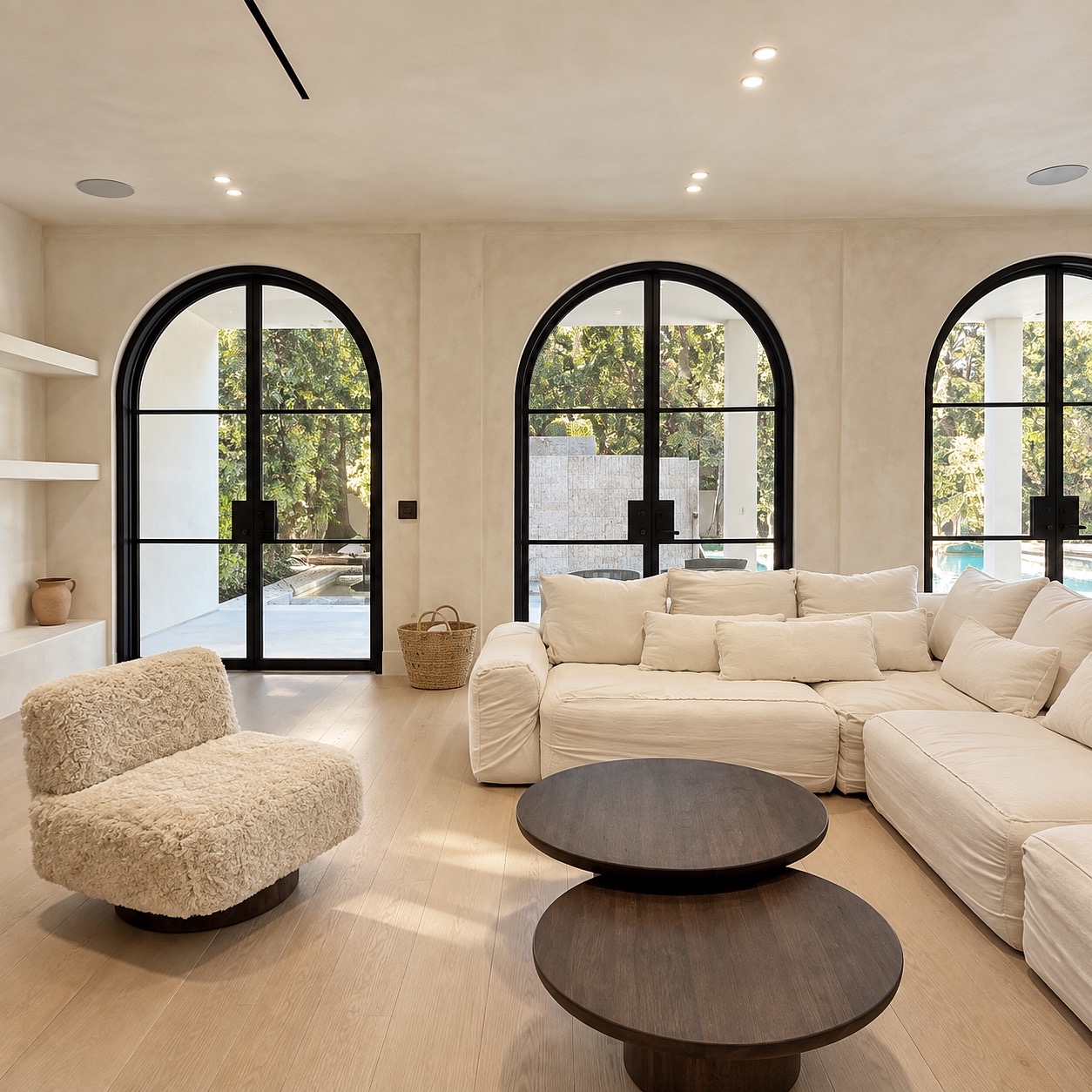
There’s a reason Mediterranean architecture continues to feel so natural in Los Angeles.
Arches soften rooms. Plaster brings movement to walls. Stone adds permanence. Courtyards create privacy and the architecture was designed around something Southern California has in abundance: sunlight and outdoor living.
But an older Mediterranean home can also carry the weight of another era.
Dark interiors. Heavy finishes. Smaller openings. Ornate details competing for attention. Kitchens disconnected from living spaces. Additions and renovations completed over decades that no longer feel like they belong to the same house.
In established Los Angeles neighborhoods, modernizing a Mediterranean home shouldn’t mean stripping away everything that gives it character.
The better question is:
What should stay and what can become quieter, lighter and more intentional?
Keep the Details That Give the Home It’s Identity
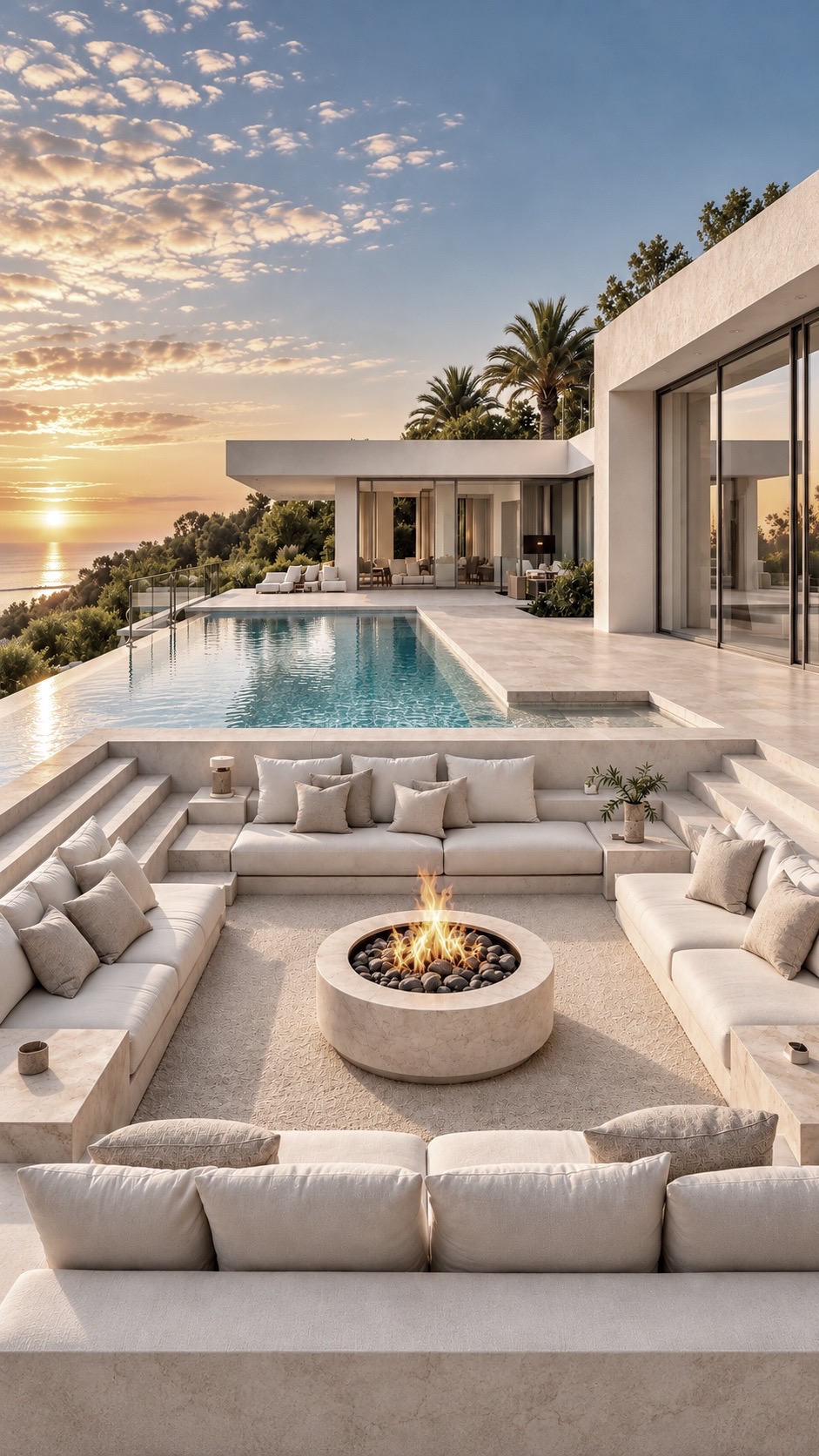
Before removing anything, find the architectural elements that make the house unmistakably Mediterranean.
It may be an arched opening, an original fireplace, a courtyard, substantial plaster walls, a tiled roofline, a beautiful staircase, or simply the proportions of the rooms.
Those details don’t need to disappear for the home to feel contemporary.
In fact, they can become more powerful when there is less competing with them.
An original arch surrounded by heavy trim and ornament may feel dated. Simplify the surrounding finishes, introduce warmer plaster and improve the lighting, and suddenly the same arch becomes a sculptural architectural moment.
Modernization doesn’t always mean replacing character. Sometimes it means finally giving that character room to breathe.
Remove the Heaviness, Not the Warmth
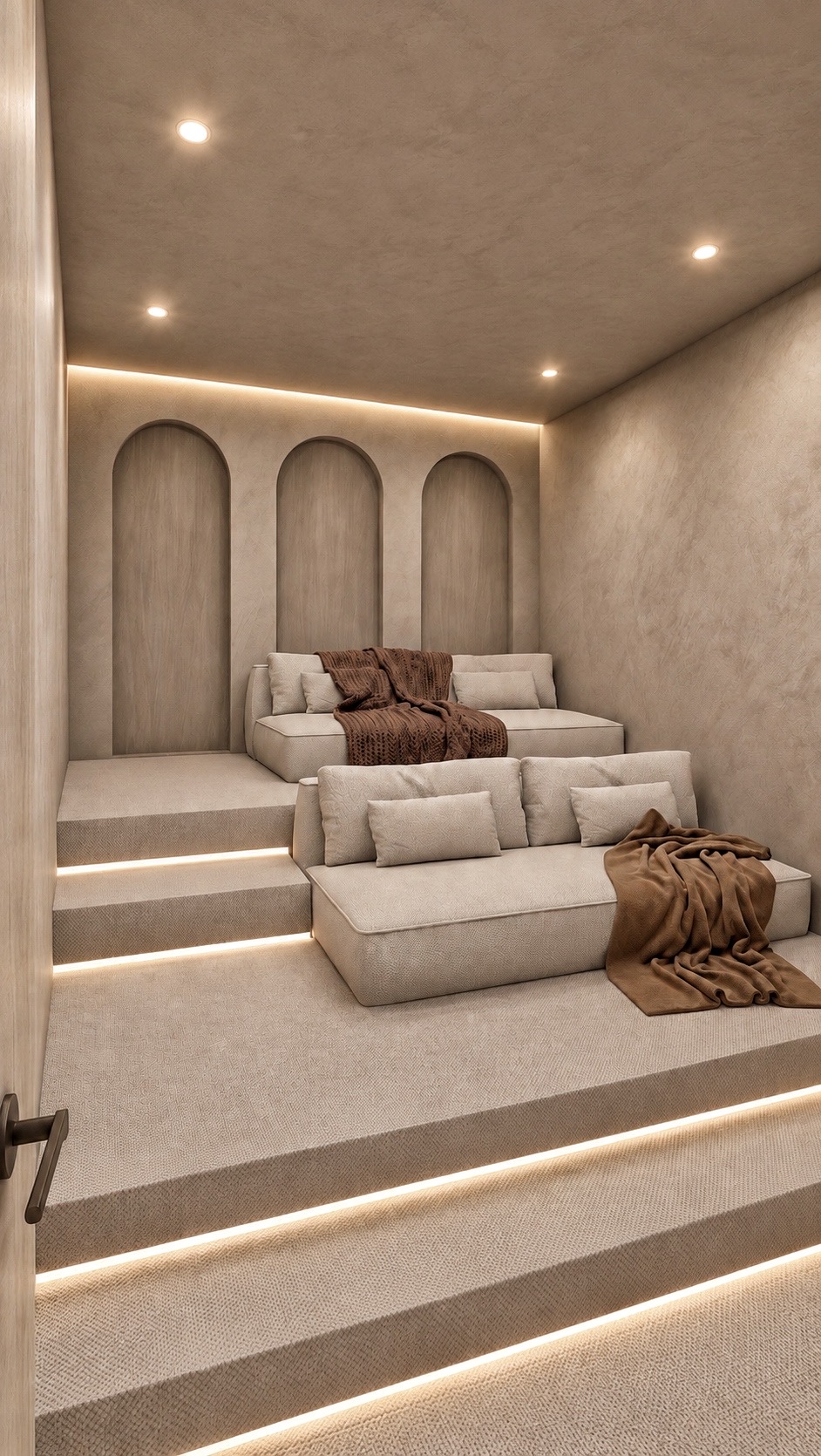
One of the easiest mistakes when modernizing Mediterranean architecture is going too far.
Dark becomes bright white. Ornate becomes completely bare. Warm rooms become stark minimalist spaces.
The house may technically look newer, but it no longer feels Mediterranean.
A more considered transformation is about subtraction.
Simplify excessive moldings. Quiet competing patterns. Reduce the number of finishes. Replace visually heavy elements where necessary. Allow the architecture itself to become more visible.
Then rebuild warmth through texture, material, light, and proportion.
The result should feel calmer, not colder.
Let Natural Materials Do More of the Work
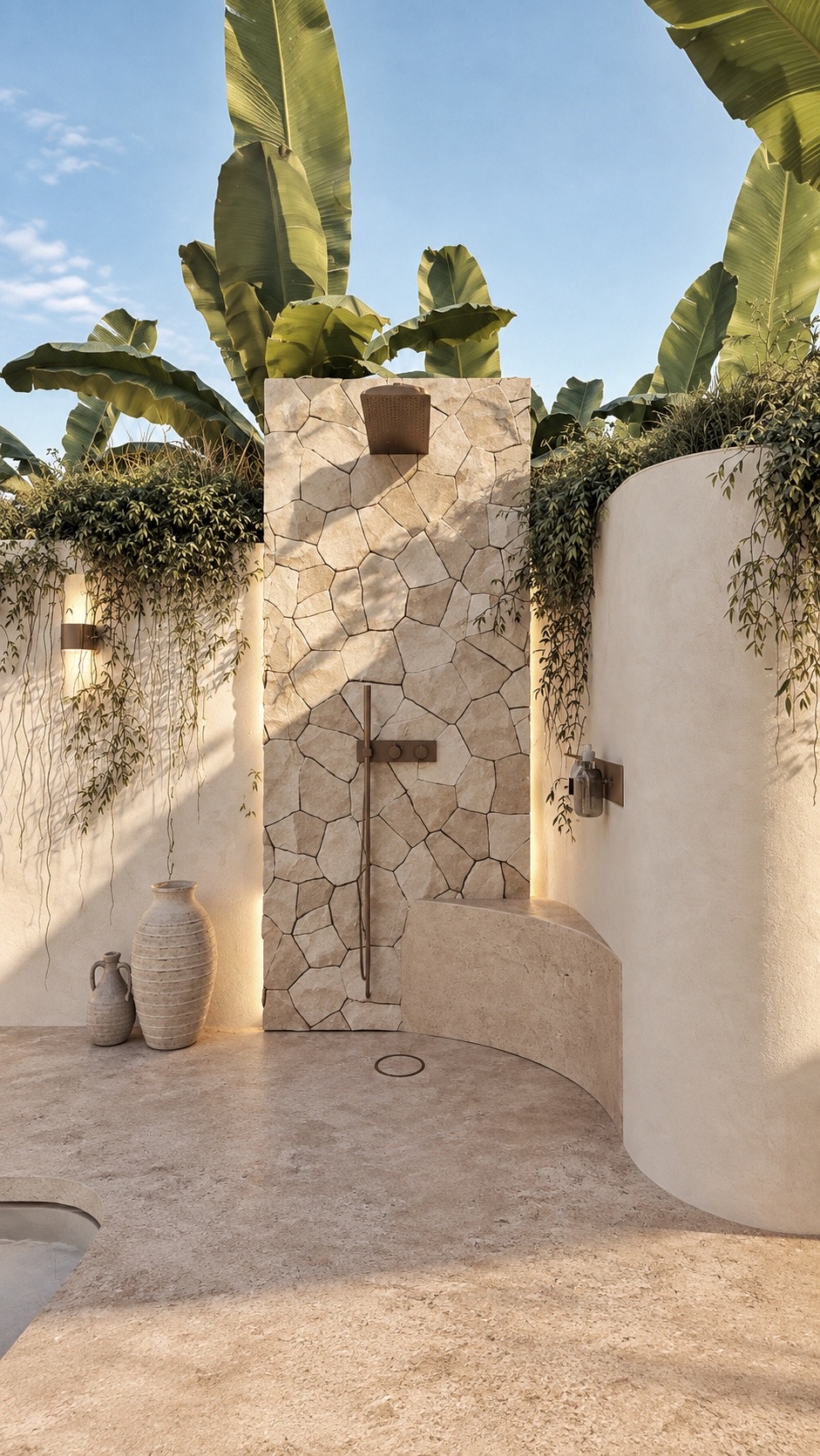
Modern Mediterranean interiors rarely need dozens of decorative elements when the materials themselves have character.
Limestone with subtle movement.
Travertine with visible variation.
Hand-finished plaster that changes throughout the day as sunlight moves across it.
Warm white oak or walnut.
Terracotta used selectively rather than covering every surface.
Aged or brushed metals that become quieter with time.
The difference is restraint.
Instead of using every Mediterranean material in every room, choose a smaller palette and allow those materials to repeat throughout the home.
A stone used at the fireplace might return outside. The wood introduced in the kitchen can appear again in custom millwork. Plaster can continue from one architectural volume into another.
That repetition creates something decoration alone cannot:
continuity.
Open the Home Without Erasing It’s Architecture
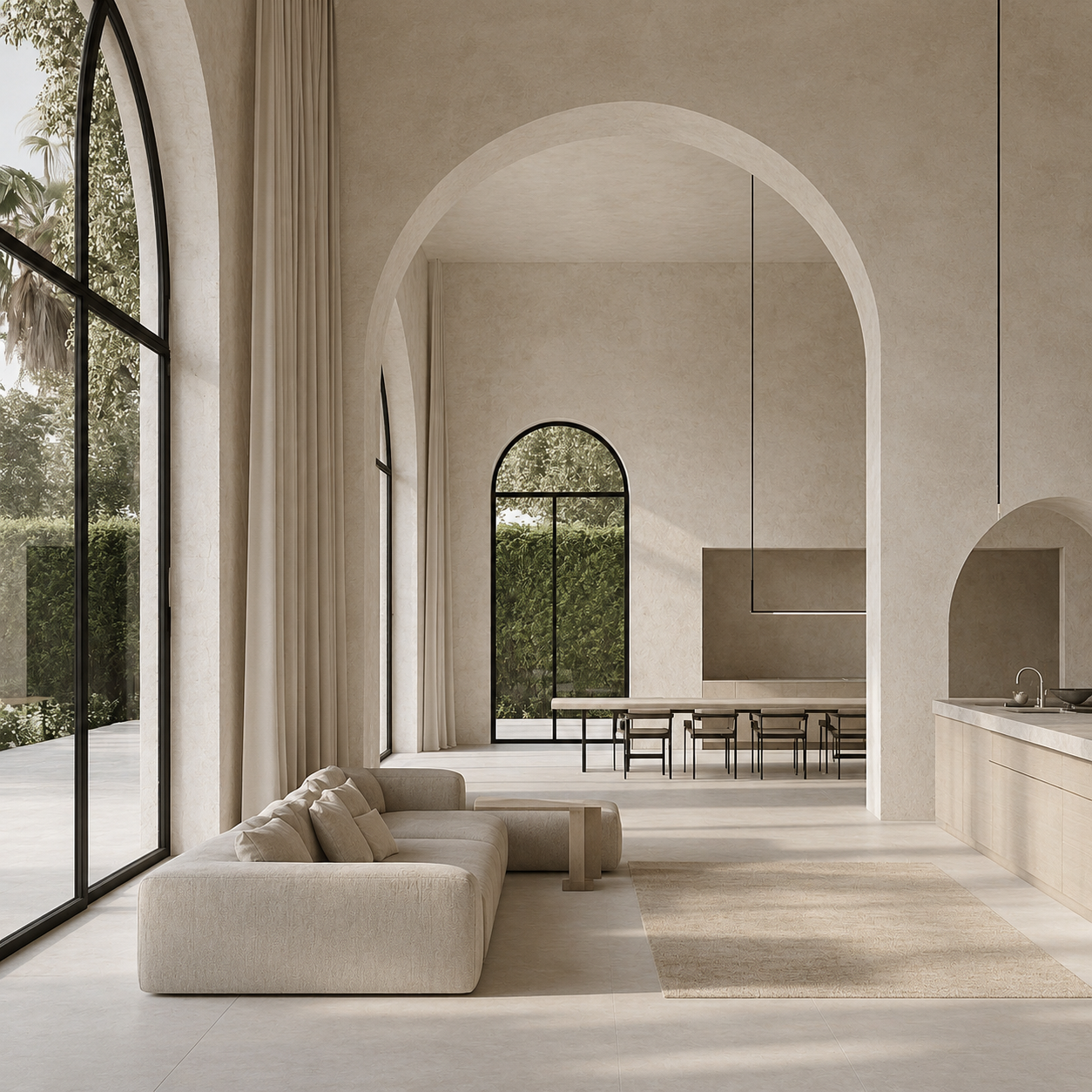
Modern living tends to favor more light, longer sightlines, and a stronger relationship between rooms.
That doesn’t mean every wall has to disappear.
In a Mediterranean home, architectural transitions are part of what creates intimacy.
An arch can frame the next room. A passage can create anticipation before opening into a larger space. A courtyard can sit between interior volumes. A substantial opening can connect a living room to the landscape without making the entire rear elevation feel like a glass box.
The goal is to improve flow while keeping moments of enclosure and transition.
Larger doors and windows can bring in more natural light. Living spaces can connect more naturally to kitchens and entertaining areas. Terraces, gardens, and pools can become extensions of interior rooms.
Open the house where it matters. Keep the architecture where it matters more.
Make the Kitchen Feel Modern Without Making It Feel Like Another House
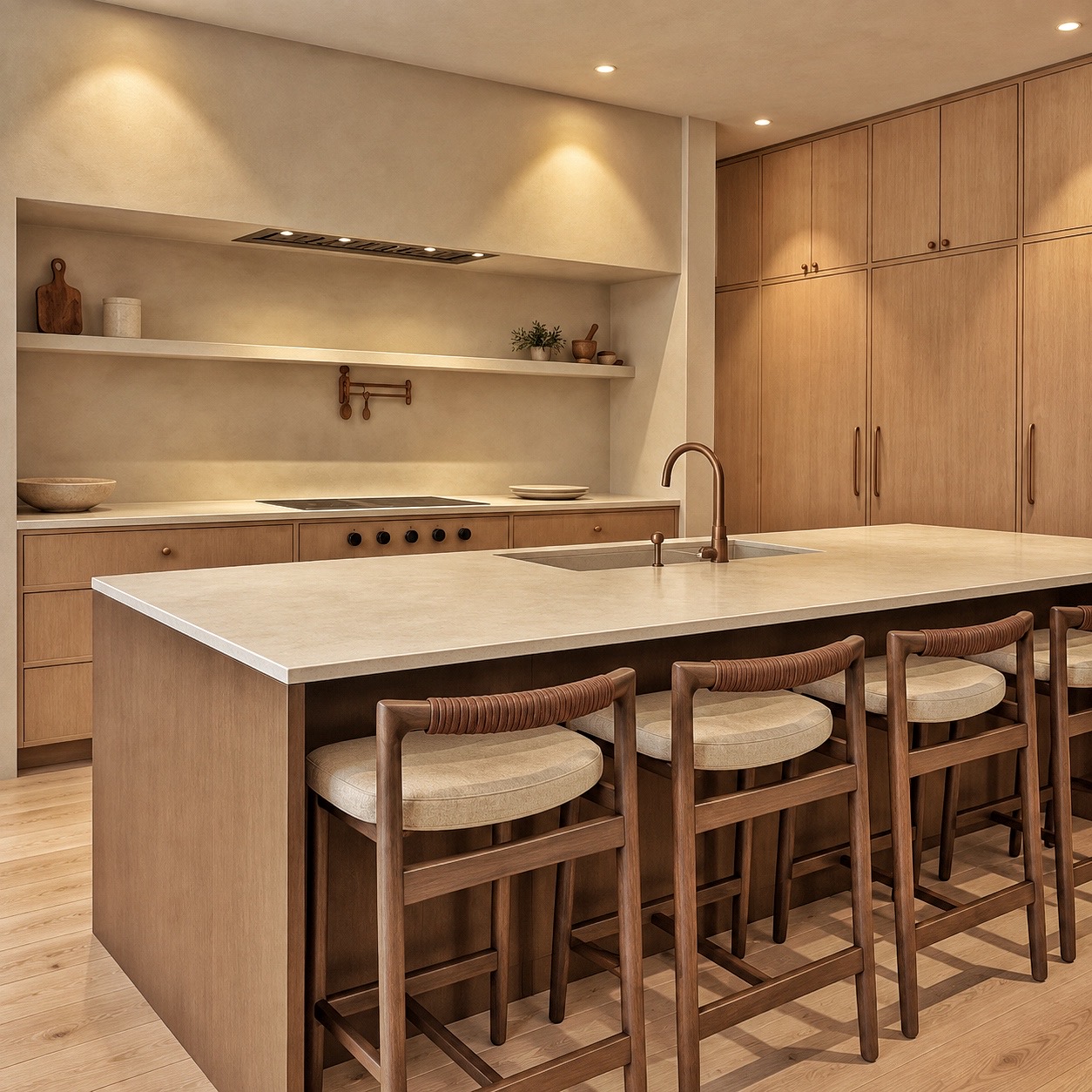
The kitchen is often where Mediterranean renovations lose their architectural language.
The rest of the home may have plaster, stone, arches, and warm wood and then suddenly the kitchen becomes glossy white cabinetry, cold marble and sharp contemporary lines.
It may be beautiful.
It just belongs to a different house.
A Modern Mediterranean kitchen can feel completely current without becoming disconnected from its surroundings.
Think sculptural plaster hoods instead of oversized decorative cabinetry. Warm white oak or walnut. Natural stone with character. Integrated appliances. Fewer upper cabinets. Custom millwork. Softer edges. Understated hardware.
The same principle applies to bathrooms.
Rather than filling them with competing finishes, allow one or two materials to establish the atmosphere.
Luxury doesn’t require more materials. It requires better decisions about the ones you use.
Let the Landscape Back Into the House
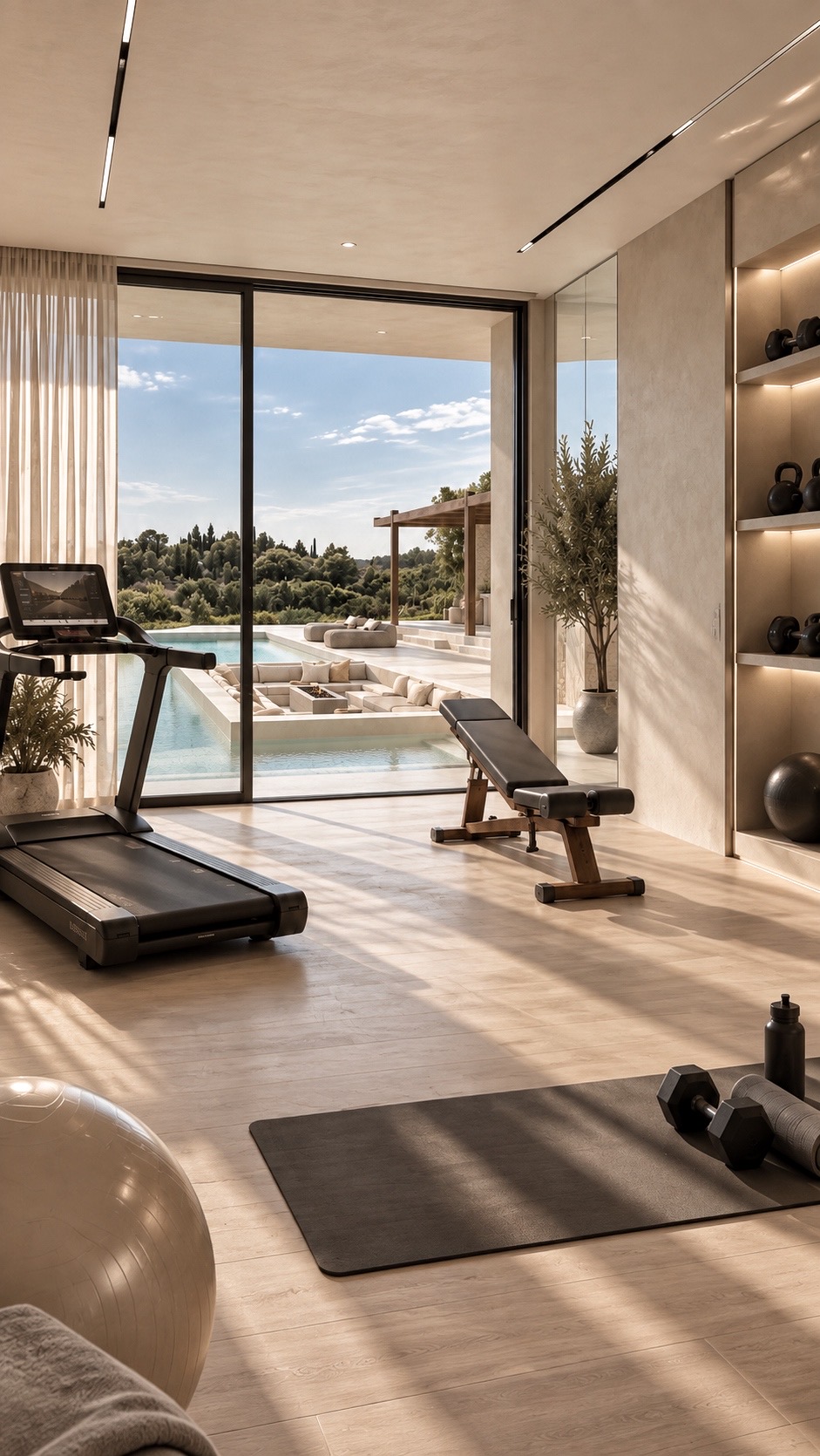
Mediterranean architecture has always had a relationship with the outdoors.
Modernizing it gives us an opportunity to make that relationship even stronger.
A previously enclosed living room can open toward a garden. A courtyard can become a central part of the floor plan. Large doors can connect a kitchen to an outdoor dining space. A pool can align with the architecture rather than feeling like something placed behind the house.
Even landscaping can influence the way the interior feels.
Olive trees, mature greenery, stone, gravel, warm planting palettes, and shaded outdoor spaces can create a visual continuation of the materials used inside.
In Los Angeles and throughout Southern California, indoor-outdoor living shouldn’t feel like an amenity added to a Mediterranean home.
It should feel like the architecture returning to what it was always meant to do.
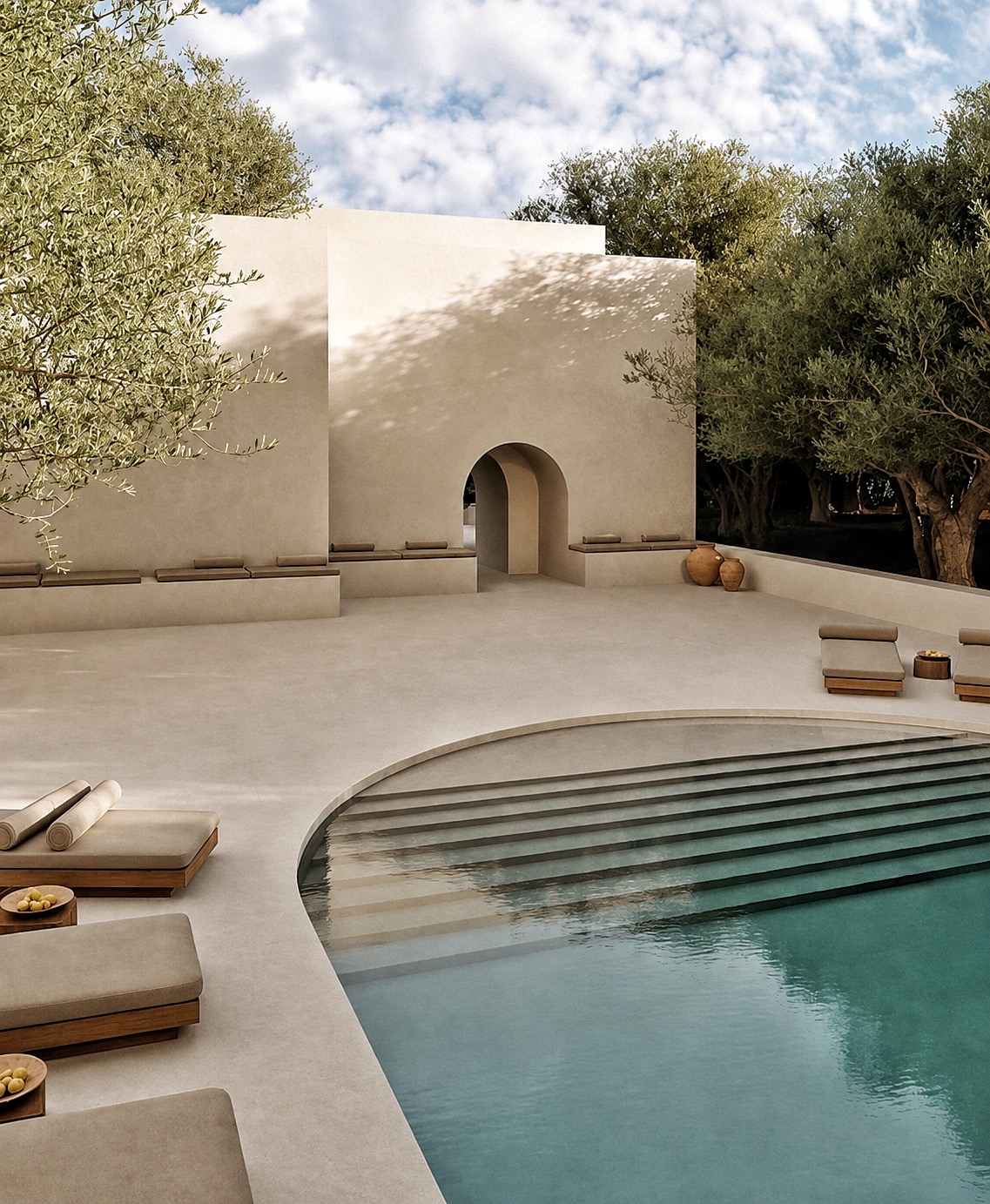
The Goal Isn’t to Make It Look New. It’s to Make It Feel Timeless.
A successful Mediterranean renovation shouldn’t leave you wondering which parts are original and which were added later.
It should simply feel like one home.
- The arches belong with the new openings.
- The old proportions work with the new floor plan.
- The stone feels connected to the landscape.
- The kitchen speaks the same architectural language as the living room.
- And everything that was worth preserving feels even more intentional than it did before.
For a major Mediterranean home renovation in Los Angeles and the surrounding areas, achieving that level of continuity requires more than selecting beautiful finishes.
Architecture affects engineering. Structural changes affect openings and flow. Interior design influences lighting, cabinetry, stone and materials. Exterior changes influence landscape and indoor-outdoor living.
At ENE Builders, those decisions are considered together through one integrated design-build team:
Architecture • Interior Design • Engineering • Permitting • Material Selection • Project Management • Construction
Because modernizing a Mediterranean home shouldn’t mean choosing between character and modern living.
The right design can give you both.
Ready to design your dream home in Los Angeles?
ENE Builders is a family-owned luxury design-build firm serving Los Angeles. We specialize in Mediterranean, Spanish Revival, and Organic Modern design — from architecture through final detail.
Contact us today to schedule your consultation.
ENE BUILDERS | LA | enebuilders.com | (877) 272-0139
License #1113906 · Family Owned · Design + Build · Architecture Through Detail