The New Language of Luxury Is Warmer, More Personal and Built to Last
For years, luxury homes were often defined by scale, expensive finishes and dramatic statements.
In 2026, that definition is changing.
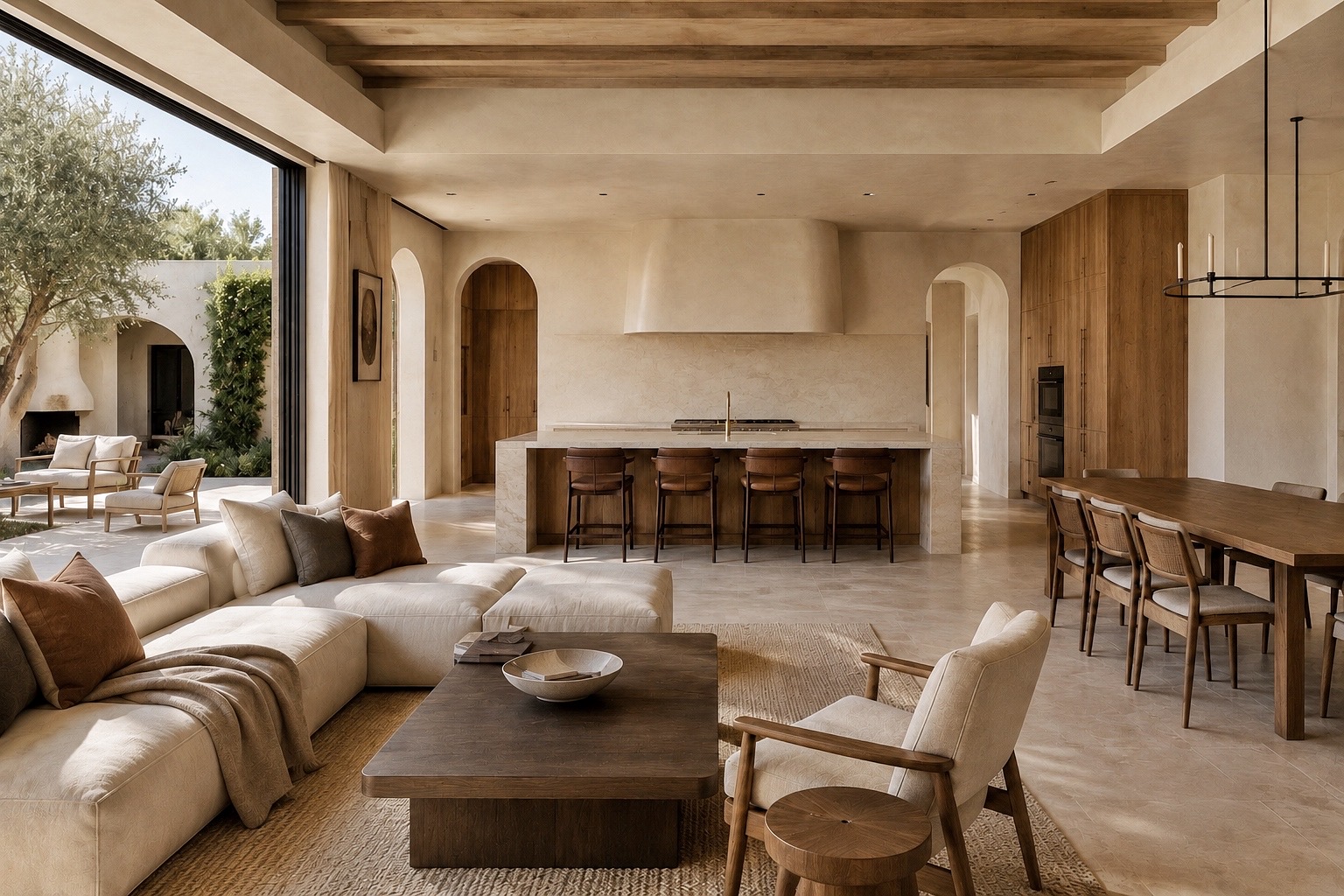
The most elevated homes are becoming warmer, quieter, more personal and more deeply connected to the way people actually live. Natural materials are replacing overly polished surfaces. Custom craftsmanship is taking priority over mass-produced details. And instead of filling every room with statement pieces, designers are allowing architecture, texture, light and proportion to create the impact.
The result is a new kind of luxury that feels intentional rather than excessive.
Here are 15 luxury home design trends shaping 2026.
1.Warm Minimalism
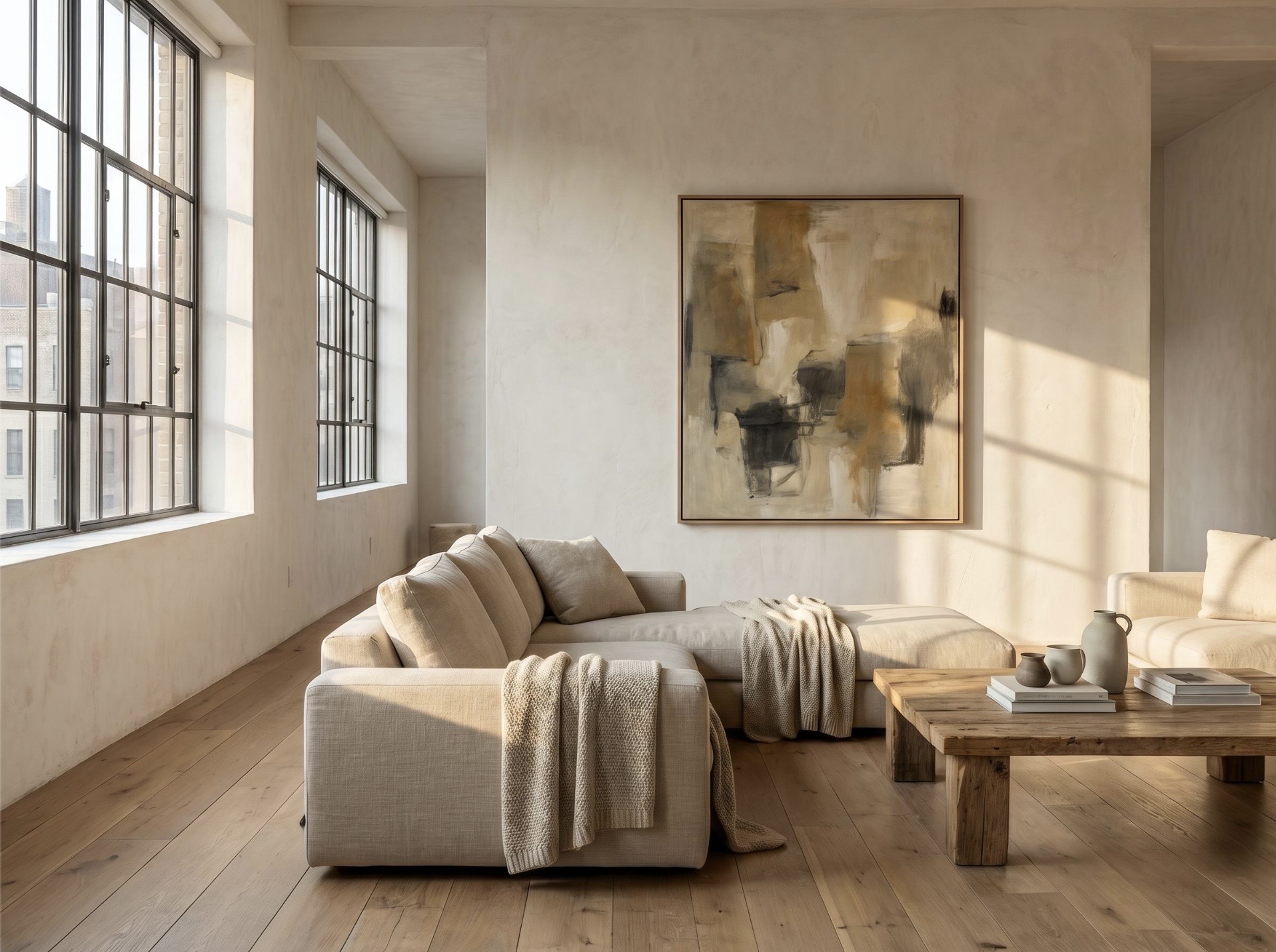
Minimalism is not disappearing, it is simply becoming softer.
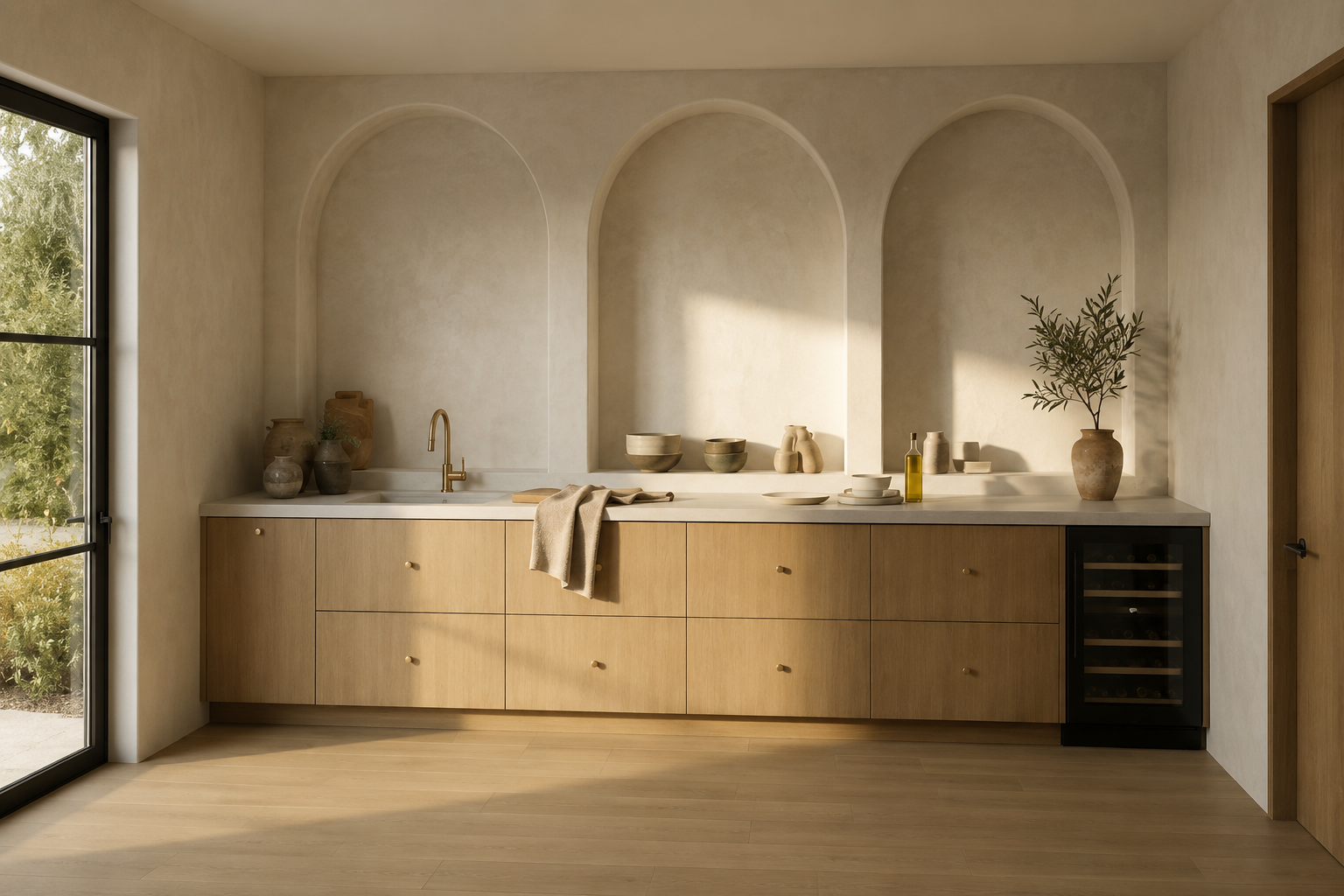
Instead of stark white rooms and sharp, cold finishes, luxury interiors are moving toward warm ivory, sand, clay, taupe, natural wood, stone, and tactile fabrics.
The spaces remain uncluttered but they feel inviting rather than sterile.
Think:
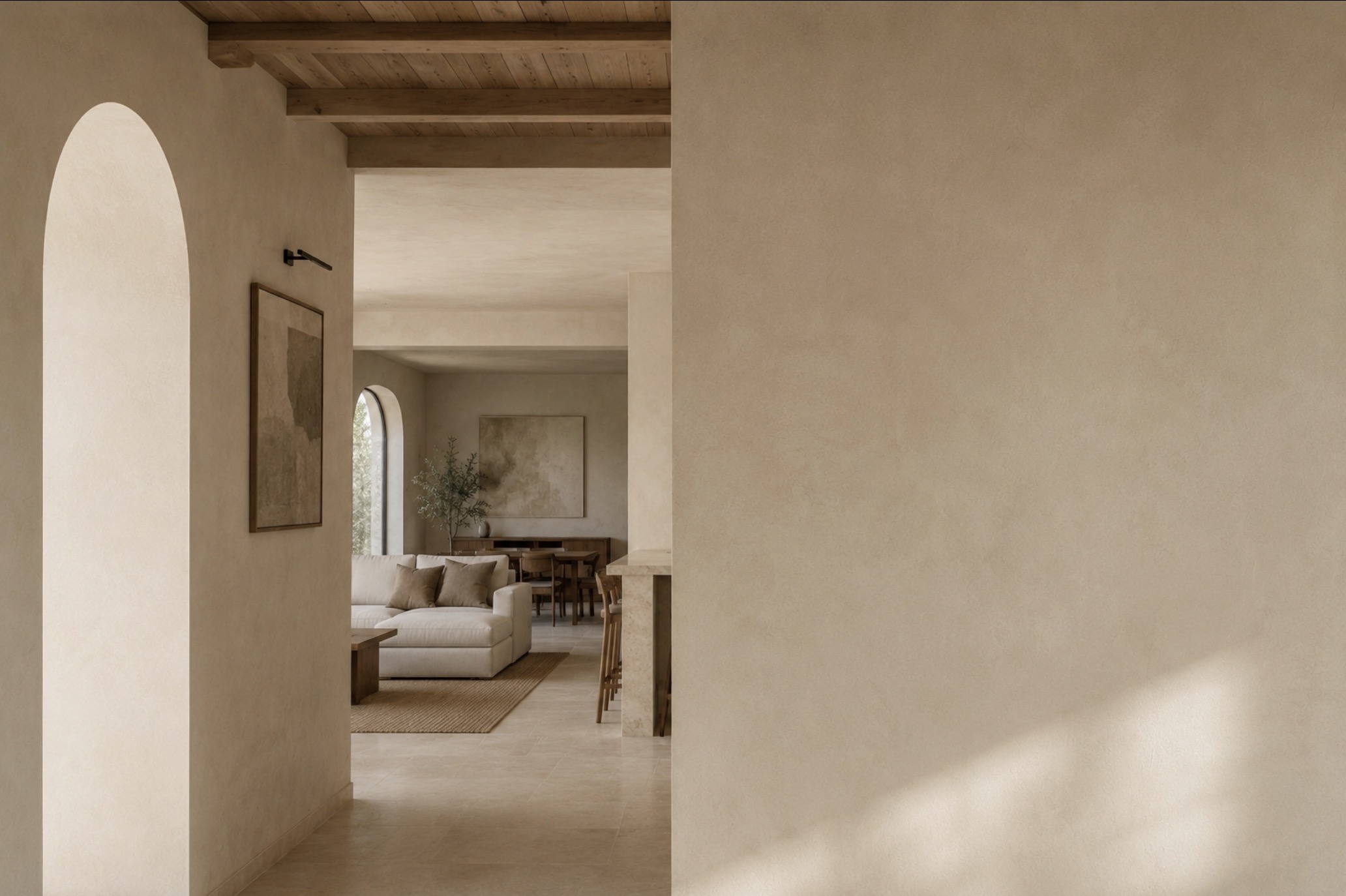
Warm plaster walls
Limestone and travertine
Linen and boucle
White oak and walnut
Soft architectural lighting
Sculptural furniture with organic forms
The goal is simplicity with depth.
2. Natural Stone With Character
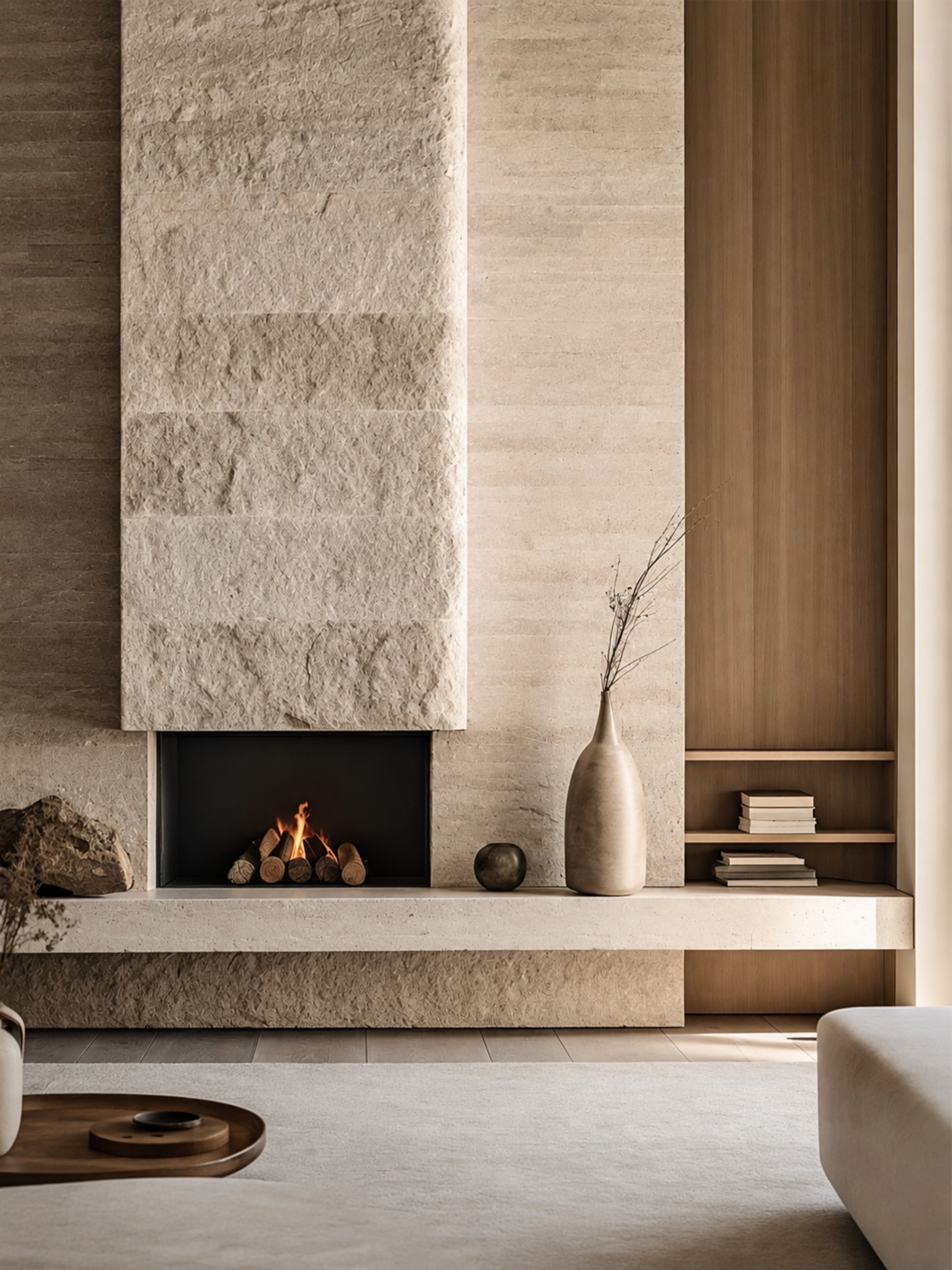
Perfectly uniform surfaces are giving way to stone that actually looks and feels natural.
In 2026, limestone, travertine, quartzite, marble, and other expressive stones are being used as architectural features rather than simply decorative finishes.
A dramatic stone fireplace, monolithic vanity, sculptural kitchen island or stone wall can become the defining element of an entire room.
The luxury comes from the material itself, its variation, texture, movement, and permanence.
3. Organic Mediterranean Architecture
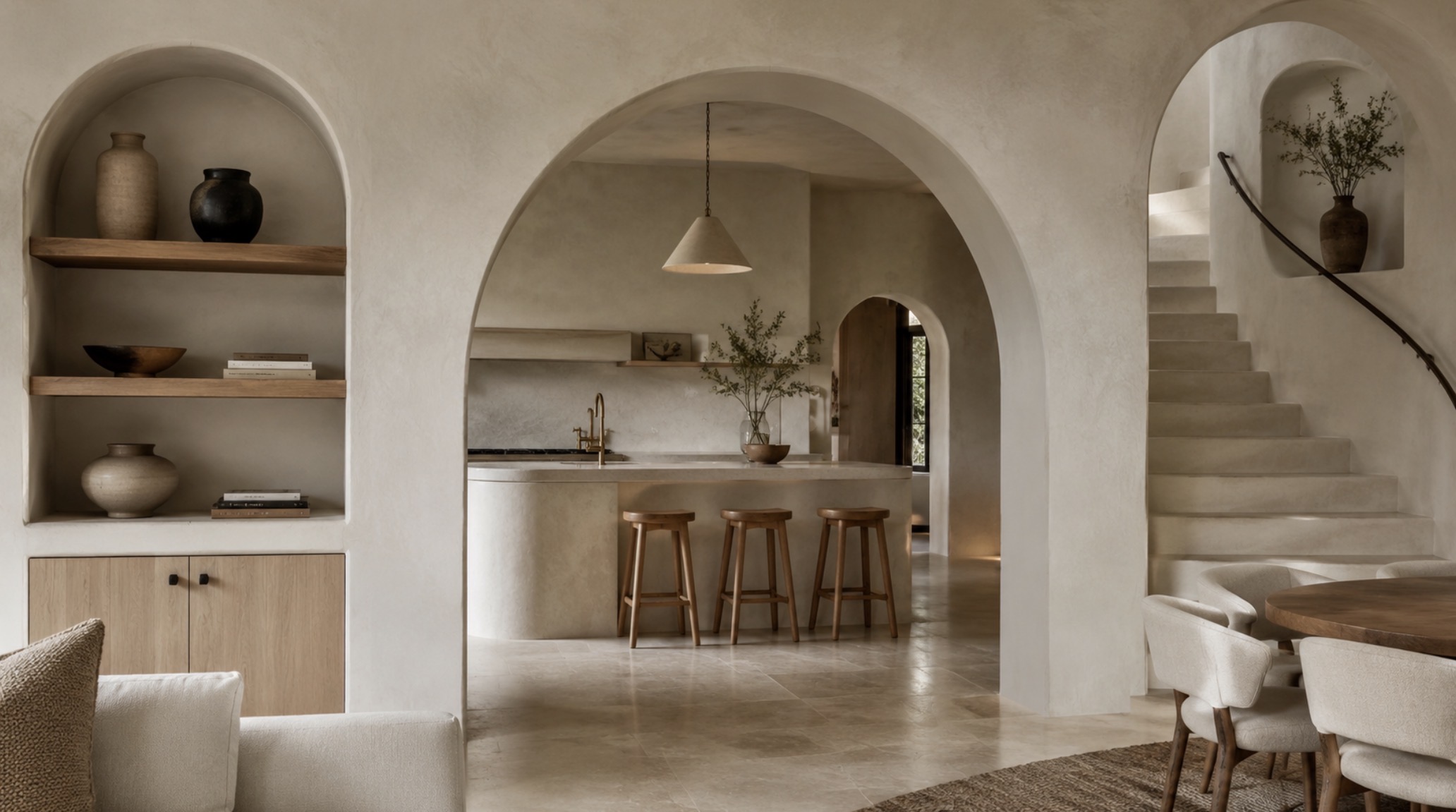
One of the strongest luxury-home directions continues to be the evolution of Mediterranean architecture.
The new interpretation is lighter and more restrained.
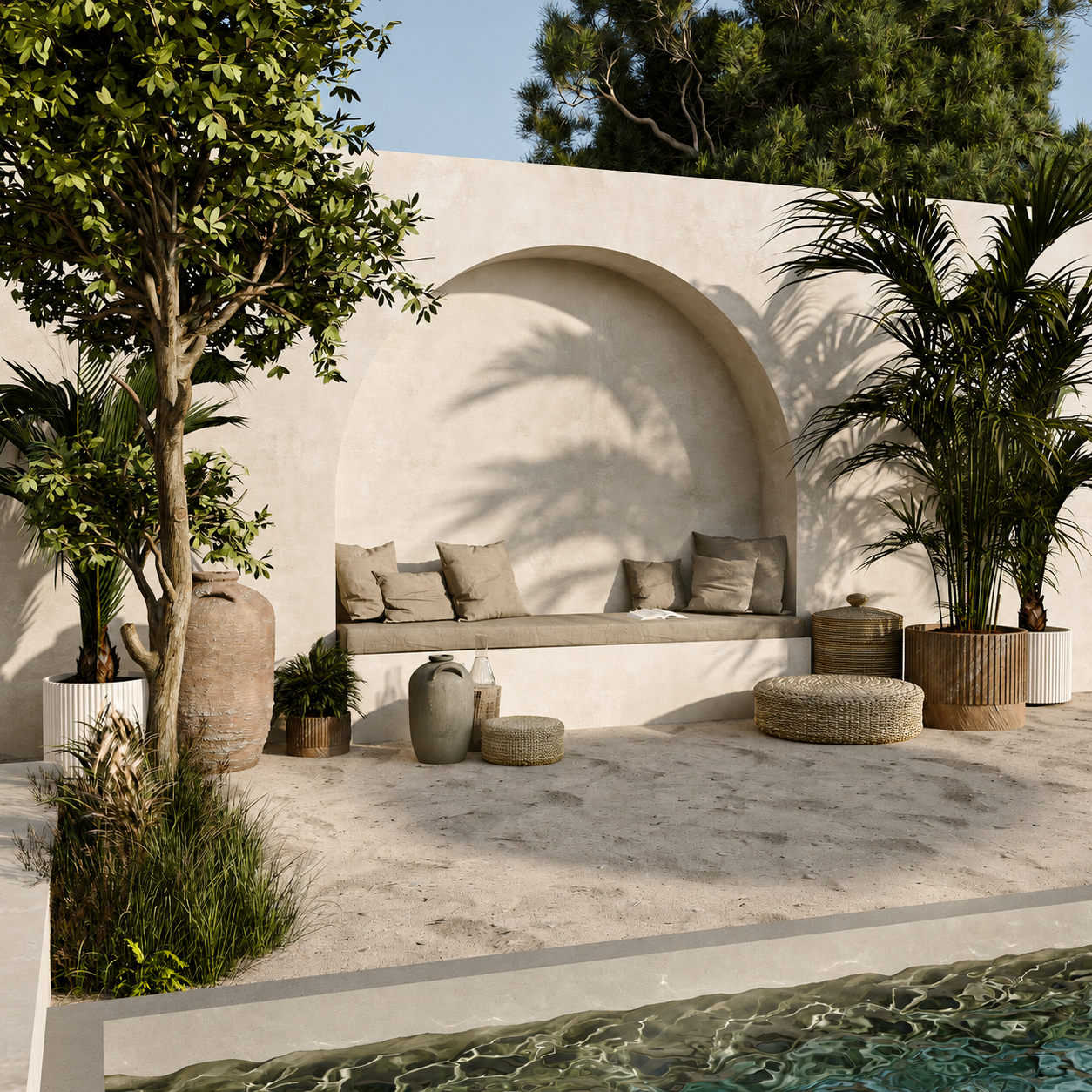
Warm plaster, simple arches, limestone, white oak, soft neutral palettes, courtyards, and indoor-outdoor spaces bring Mediterranean influence into homes without the heaviness of traditional Tuscan design.
It feels historic without feeling dated and modern without feeling cold.
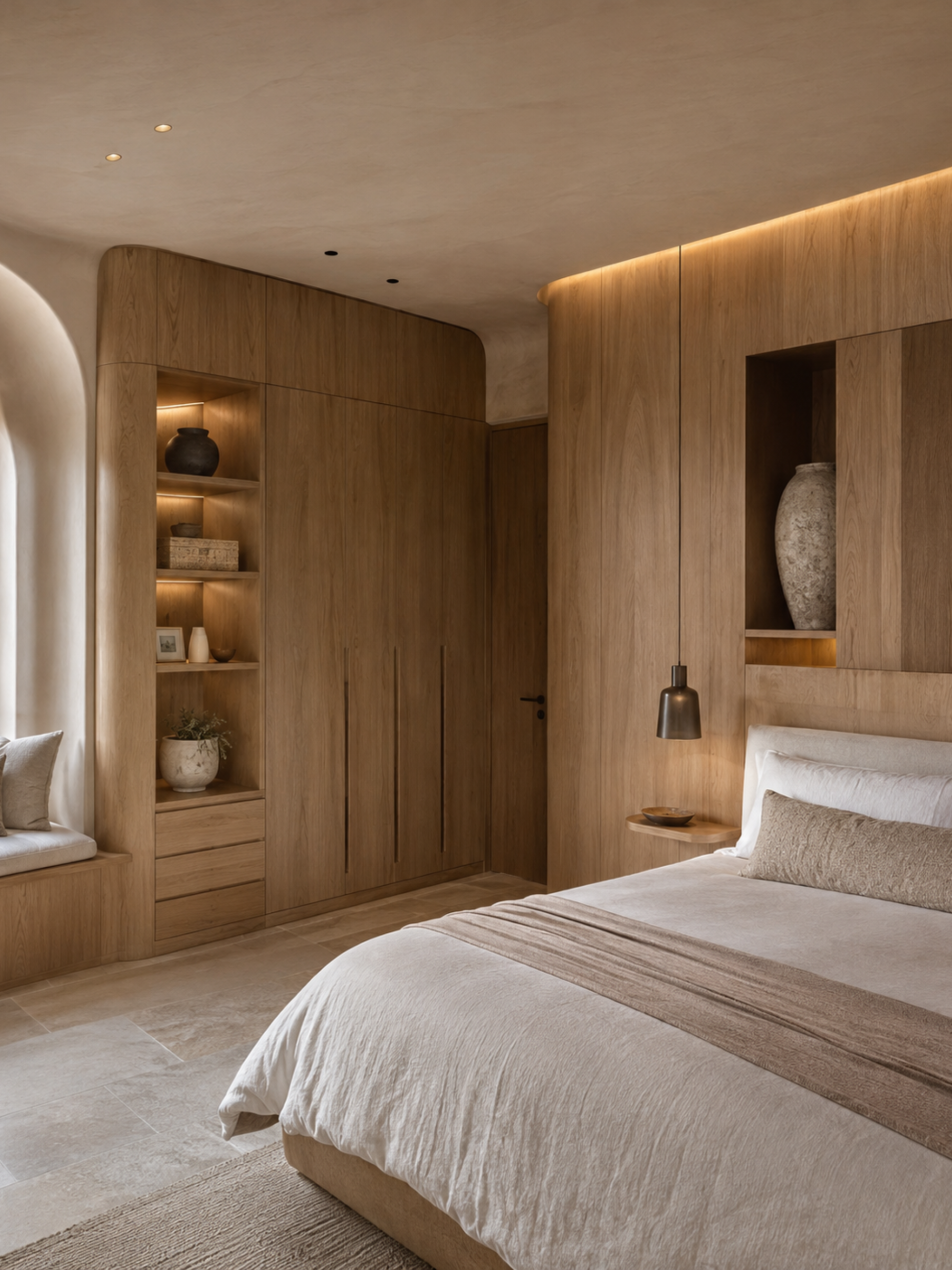
4. Custom Millwork That Becomes Architecture
Luxury cabinetry is moving beyond storage.
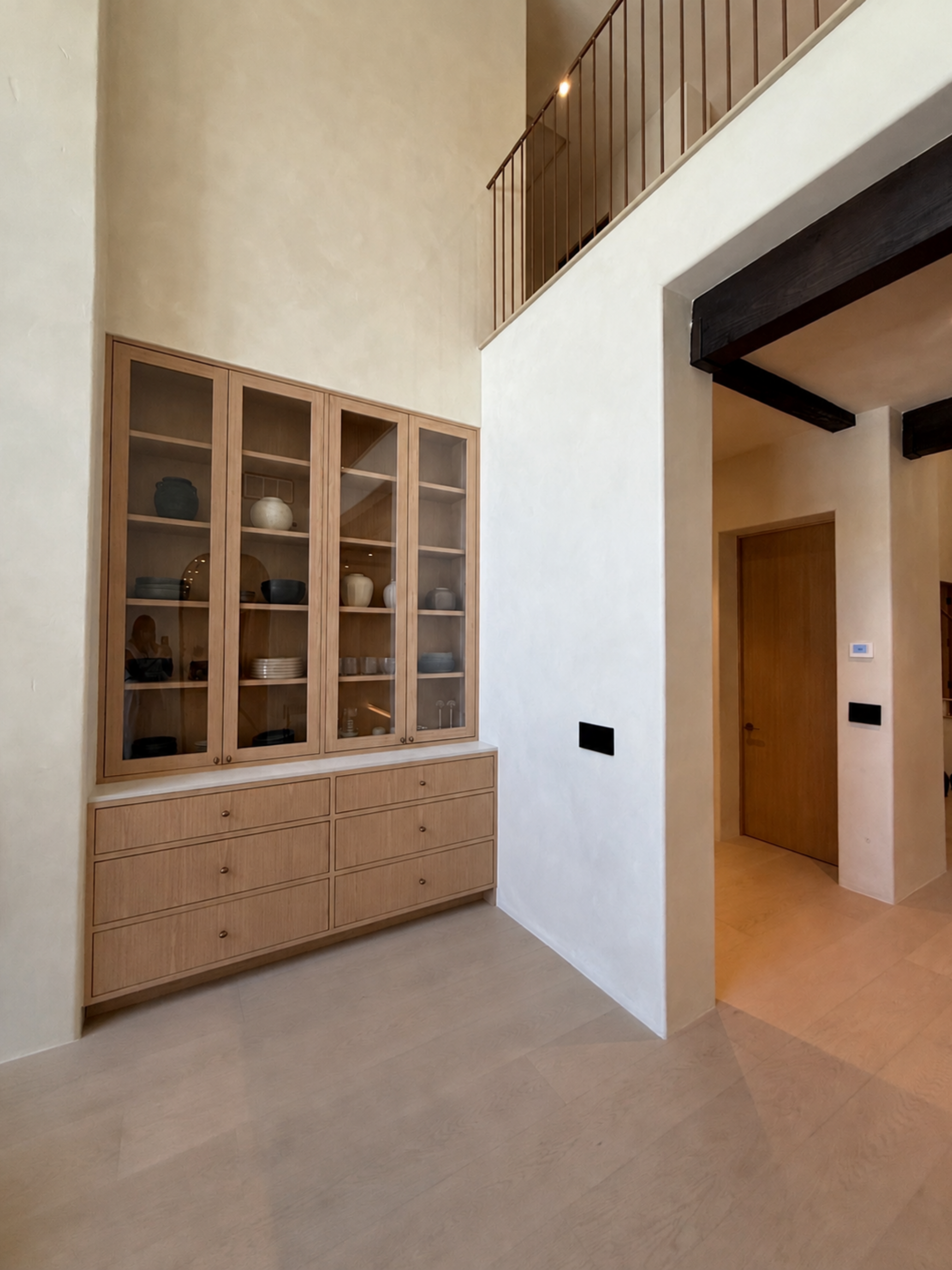
Custom millwork is increasingly being designed as part of the architecture itself, wrapping entire walls, framing doorways, concealing appliances and creating seamless transitions between rooms.
Full-height white oak cabinetry, integrated bars, libraries, dressing rooms, hidden doors and built-in shelving make a home feel considered down to the smallest detail.
The difference is subtle but immediately noticeable.
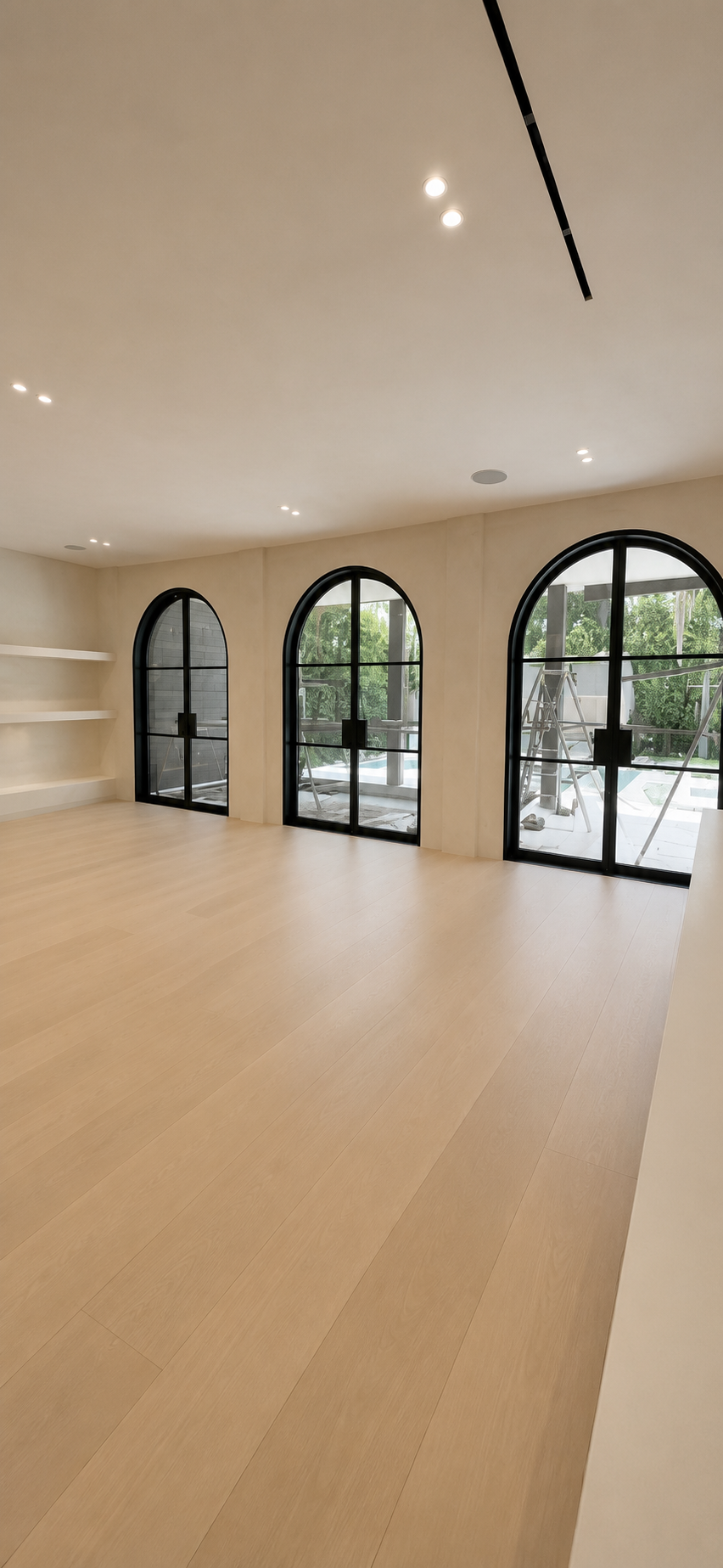
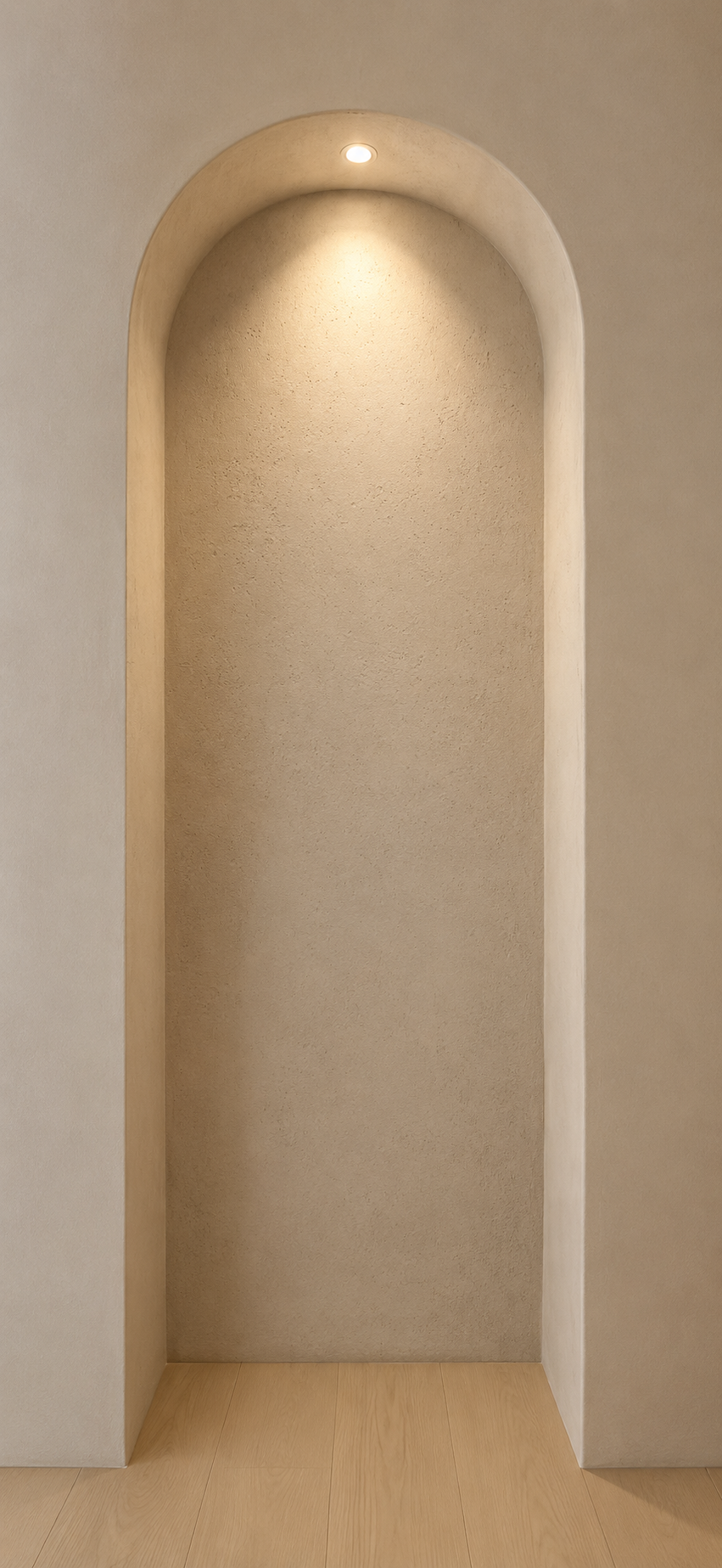
5. Softer Arches and Curves
Curves continue to influence luxury homes in 2026 but they are becoming more architectural and less decorative.
Rather than adding arches everywhere, designers are using them selectively to frame important views and transitions.
We are seeing:
Oversized arched openings
Rounded kitchen islands
Curved staircases
Sculptural niches
Soft-edged furniture
Rounded bathroom details
The effect is calmer, more fluid and more organic.
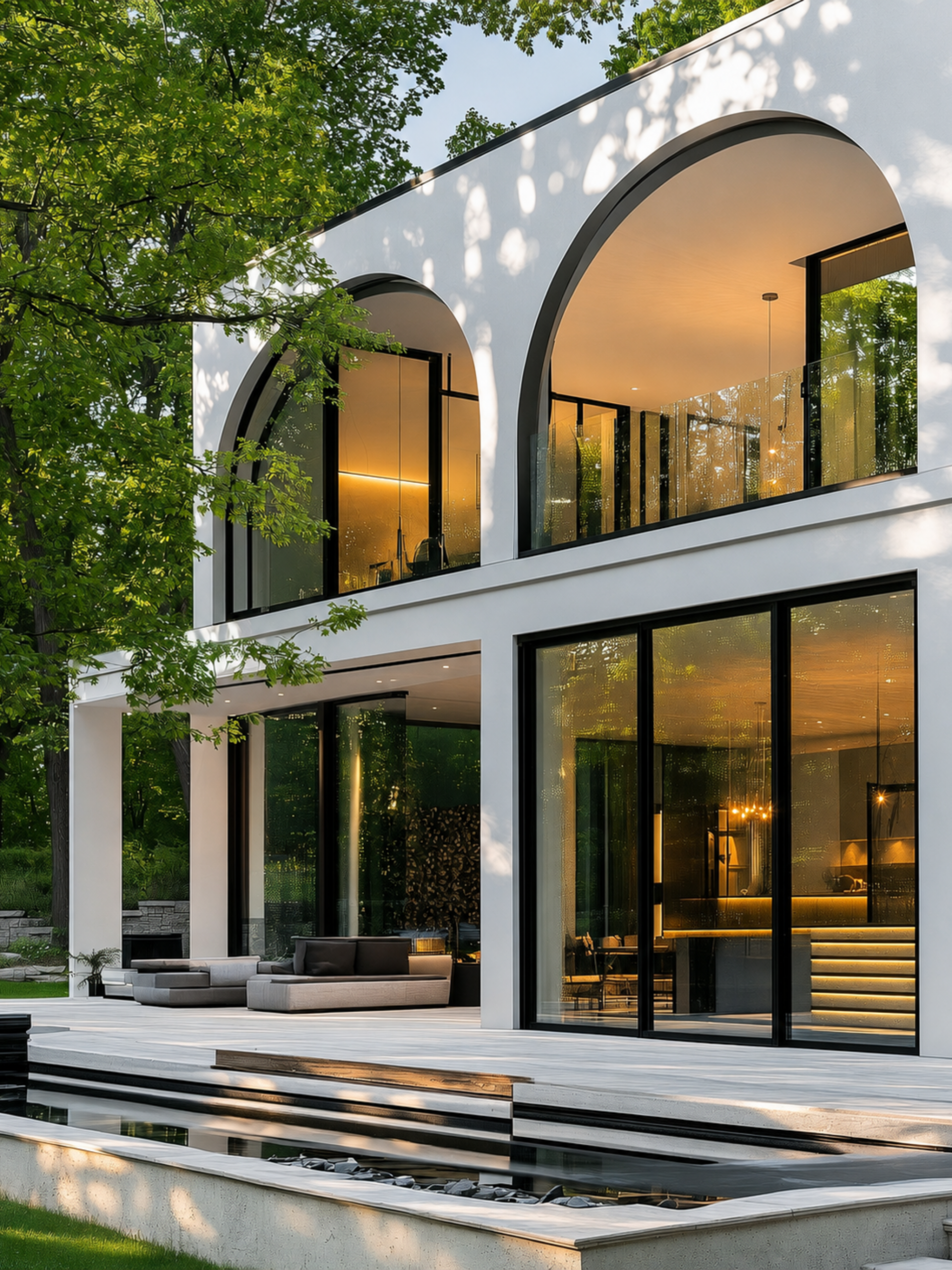
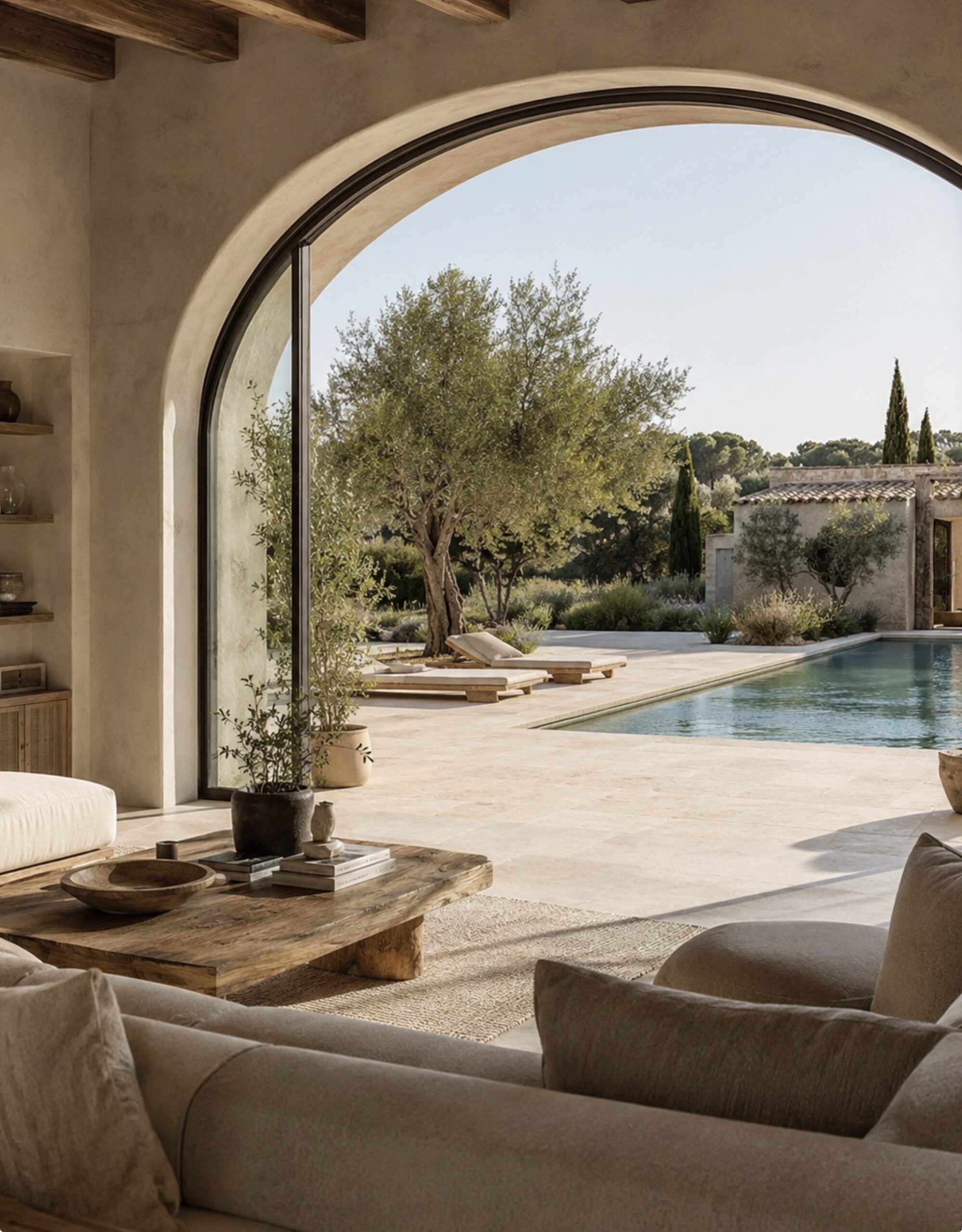
6. Indoor – Outdoor Living
In California luxury homes, outdoor living is no longer treated as a separate feature.
The architecture itself is being designed to dissolve the boundary between inside and outside.
Large openings connect living rooms to covered terraces, kitchens flow toward outdoor dining areas and continuous limestone or stone flooring visually extends the interior into the landscape.
Pools, courtyards, loggias, gardens, and outdoor kitchens become part of the home’s everyday living space.
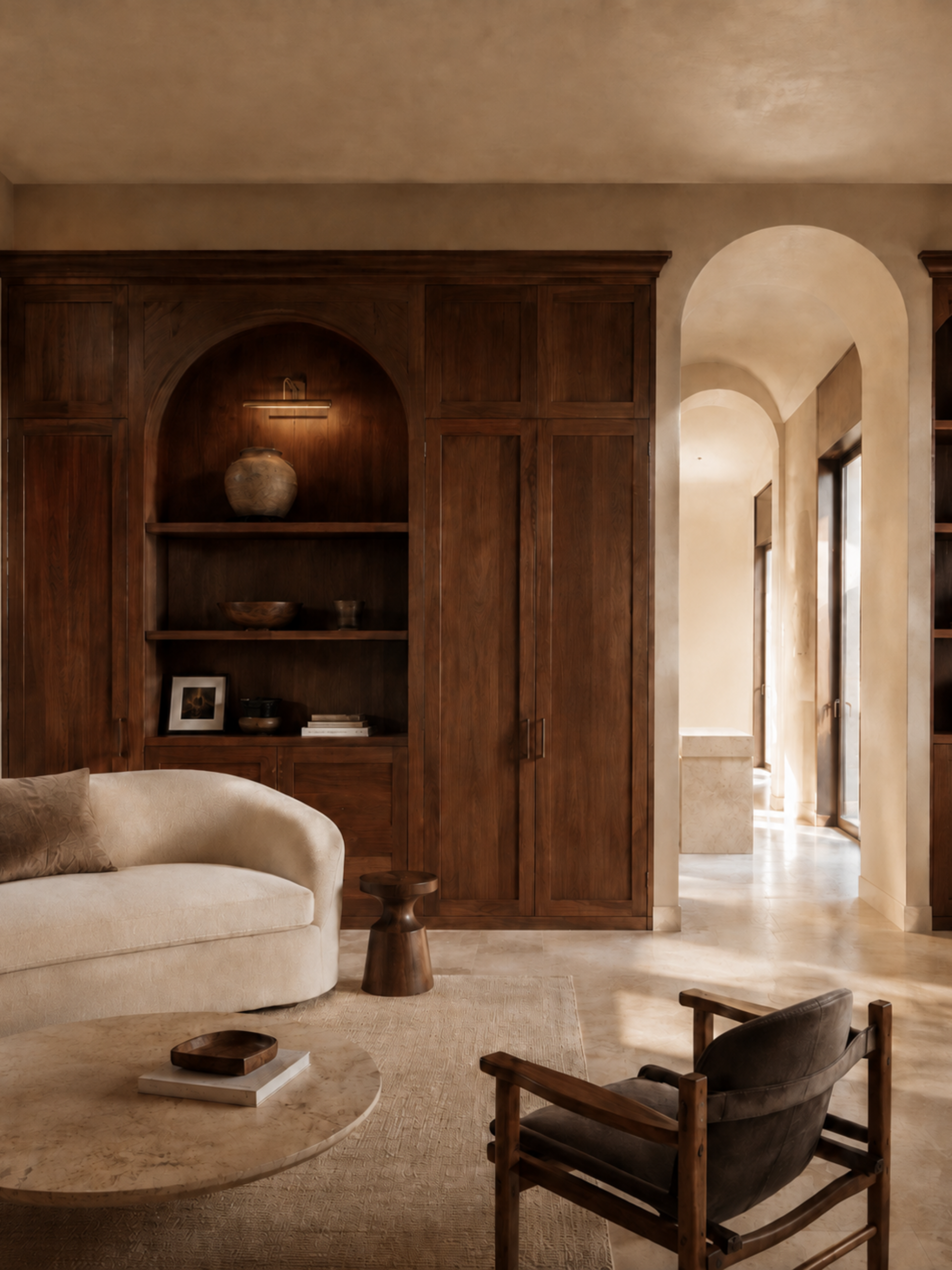
7. The Return of Richer Wood Tones
White oak remains important, but luxury interiors are beginning to incorporate deeper, richer woods as well.
Walnut, medium oak, smoked finishes and warm brown cabinetry are bringing greater contrast and sophistication into kitchens, libraries, bedrooms, and custom built-ins.
Warm woods are among the notable materials appearing across 2026 kitchen and home-design forecasts.
The key is balance.
Instead of covering every surface in wood, designers are using it strategically against plaster, stone and lighter neutral finishes.
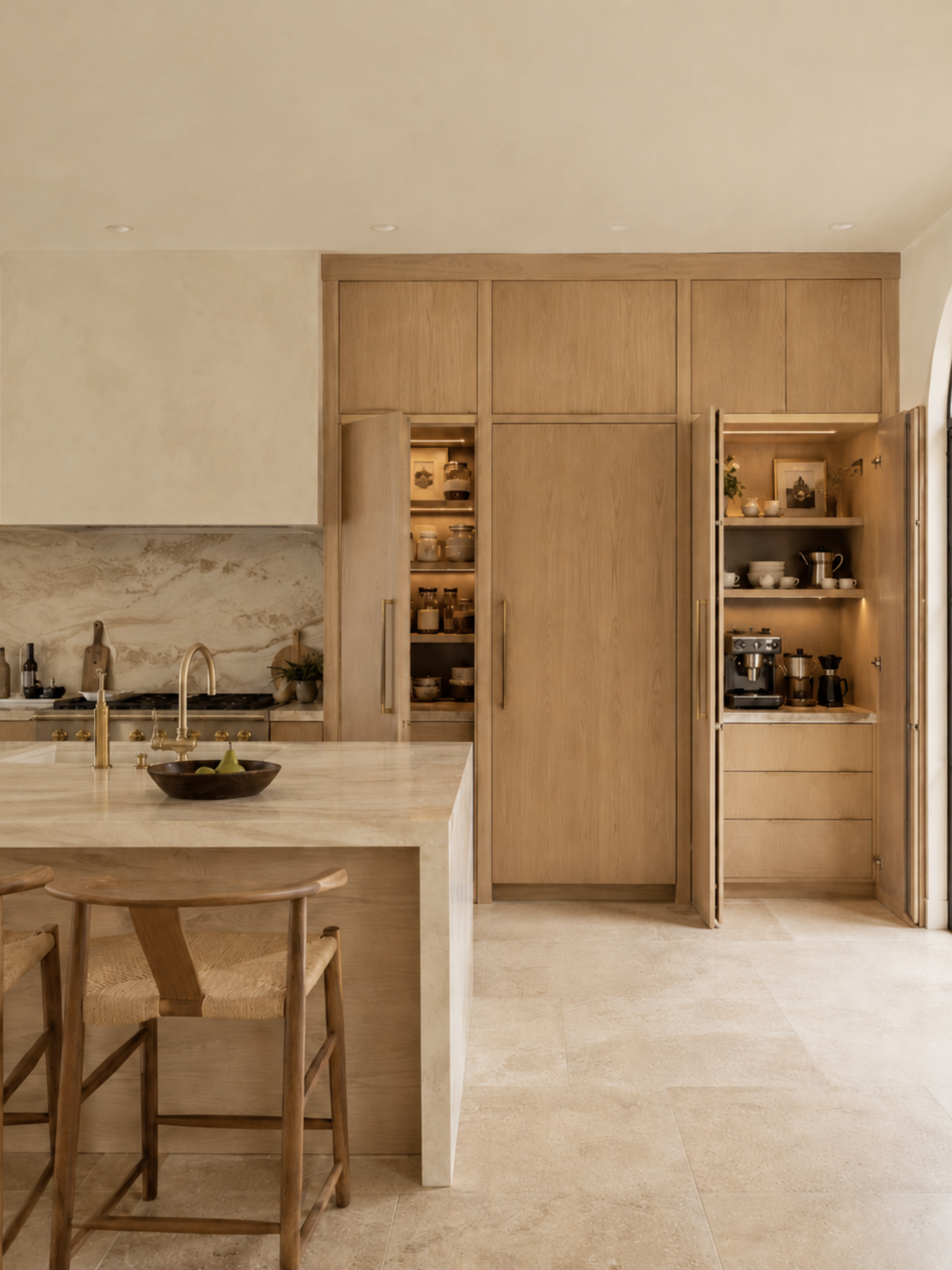
8. Kitchens That Hide the Work
Luxury kitchens are becoming visually calmer.
Appliances, small equipment, food storage, and preparation areas are increasingly concealed behind integrated cabinetry or moved into secondary spaces.
Expect to see more:
Appliance garages
Concealed refrigerators
Panel-ready appliances
Back kitchens
Butler’s pantries
Prep kitchens
Hidden coffee stations
The main kitchen becomes a beautifully composed social space while the more functional work happens discreetly behind the scenes.
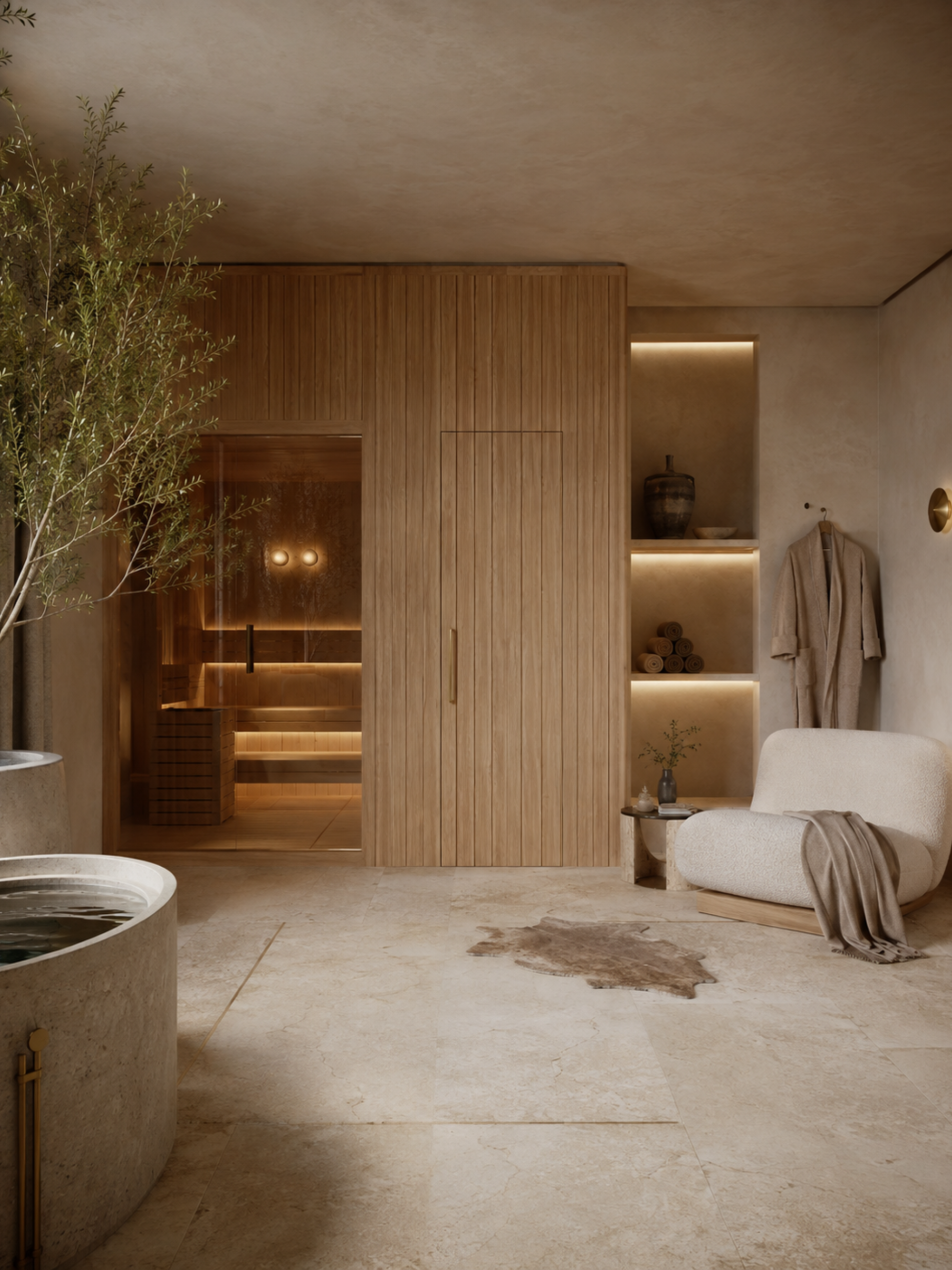
9. Spa Architecture at Home
Bathrooms are becoming true wellness environments rather than simply beautiful rooms.
The luxury bathroom of 2026 is less about decorative excess and more about atmosphere.
Large walk-in showers, steam systems, integrated benches, stone surfaces, concealed lighting, sculptural tubs and natural materials create a quiet, restorative experience.
Wellness-focused spaces are among the major directions Houzz identifies in homes this year.
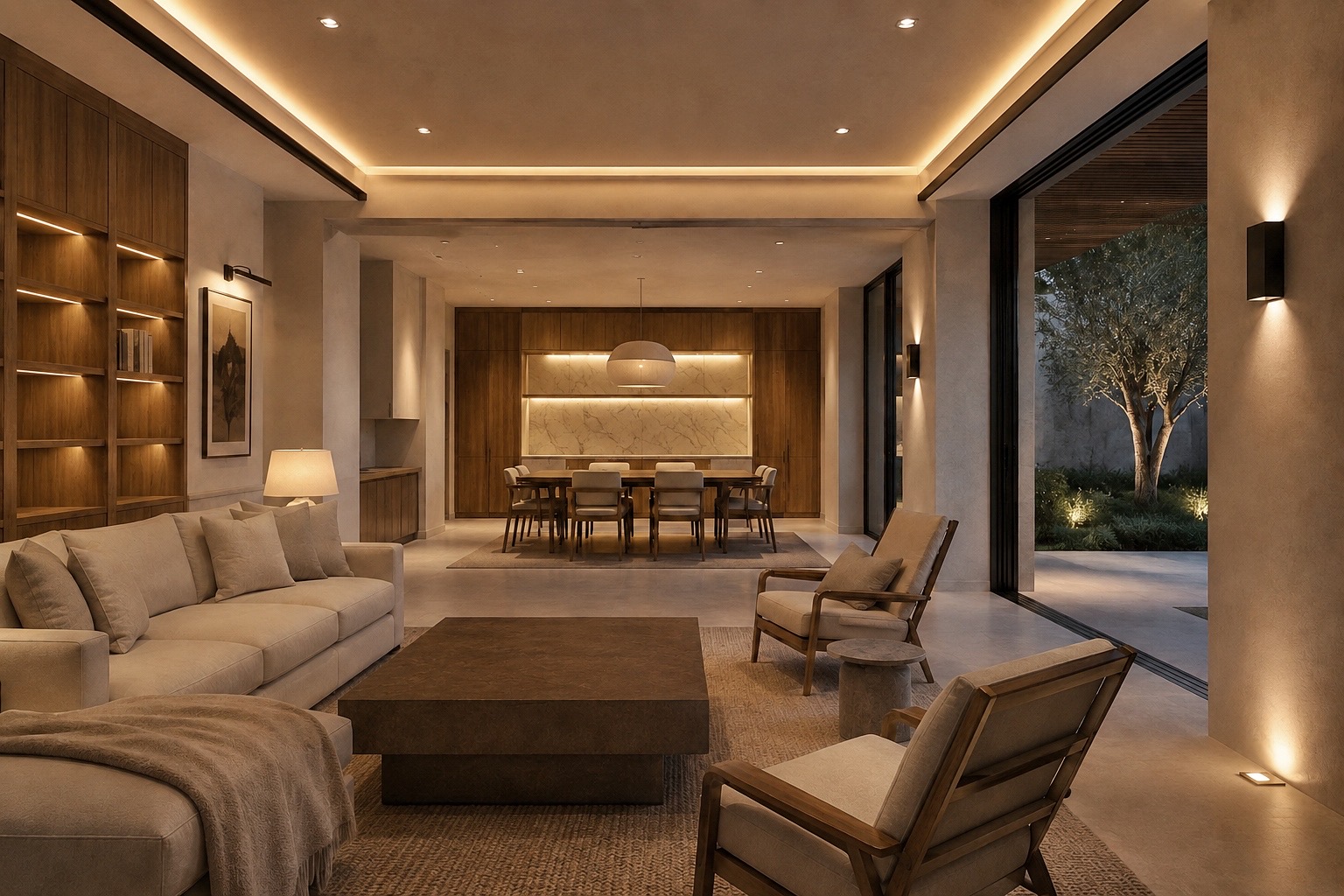
10. Layered Architectural Lighting
One chandelier is no longer expected to do all the work.
High-end interiors are increasingly designed around multiple layers of light.
Ambient lighting establishes the overall atmosphere.
Architectural lighting highlights walls, ceilings, cabinetry, and materials.
Accent lighting creates focal points.
Integrated lighting disappears into shelves, niches, millwork, and ceilings.
When done well, you notice the architecture not the fixture.
11. Quiet Luxury Over Obvious Luxury
The idea of luxury itself is becoming more restrained.
Designers are moving away from rooms filled with oversized statement pieces, excessive stone, branded objects, and features that exist primarily to signal expense. Recent designer commentary has emphasized proportion, practicality, layering, and individuality over conspicuous upgrades.
Instead, luxury is being expressed through:
Better proportions
Authentic materials
Bespoke craftsmanship
Thoughtful details
Beautiful natural light
Custom architecture
You may not immediately know what made the room expensive.
You simply know that it feels exceptional.
12. Homes Designed Around the Owner – Not Resale
The idea of designing every house for a future buyer is starting to lose influence.
More homeowners are creating what they actually want to live in.
That means dedicated dressing rooms, wellness rooms, libraries, home gyms, wine rooms, creative studios, oversized pantries and highly personalized storage.
The emerging “forever home” mindset places daily life and personal preference ahead of generic resale appeal.
Customization is becoming one of the strongest forms of modern luxury.
13. Hand-Finished walls and Visible Texture
Perfectly flat drywall is no longer the only definition of refinement.
Limewash, Venetian plaster, hand-troweled plaster, textured stone, clay finishes and other tactile surfaces are bringing depth back into interiors.
Natural variation catches light differently throughout the day, allowing even a neutral room to feel layered.
Instead of adding more décor, designers are allowing the walls themselves to create character.
14. Hidden Technology
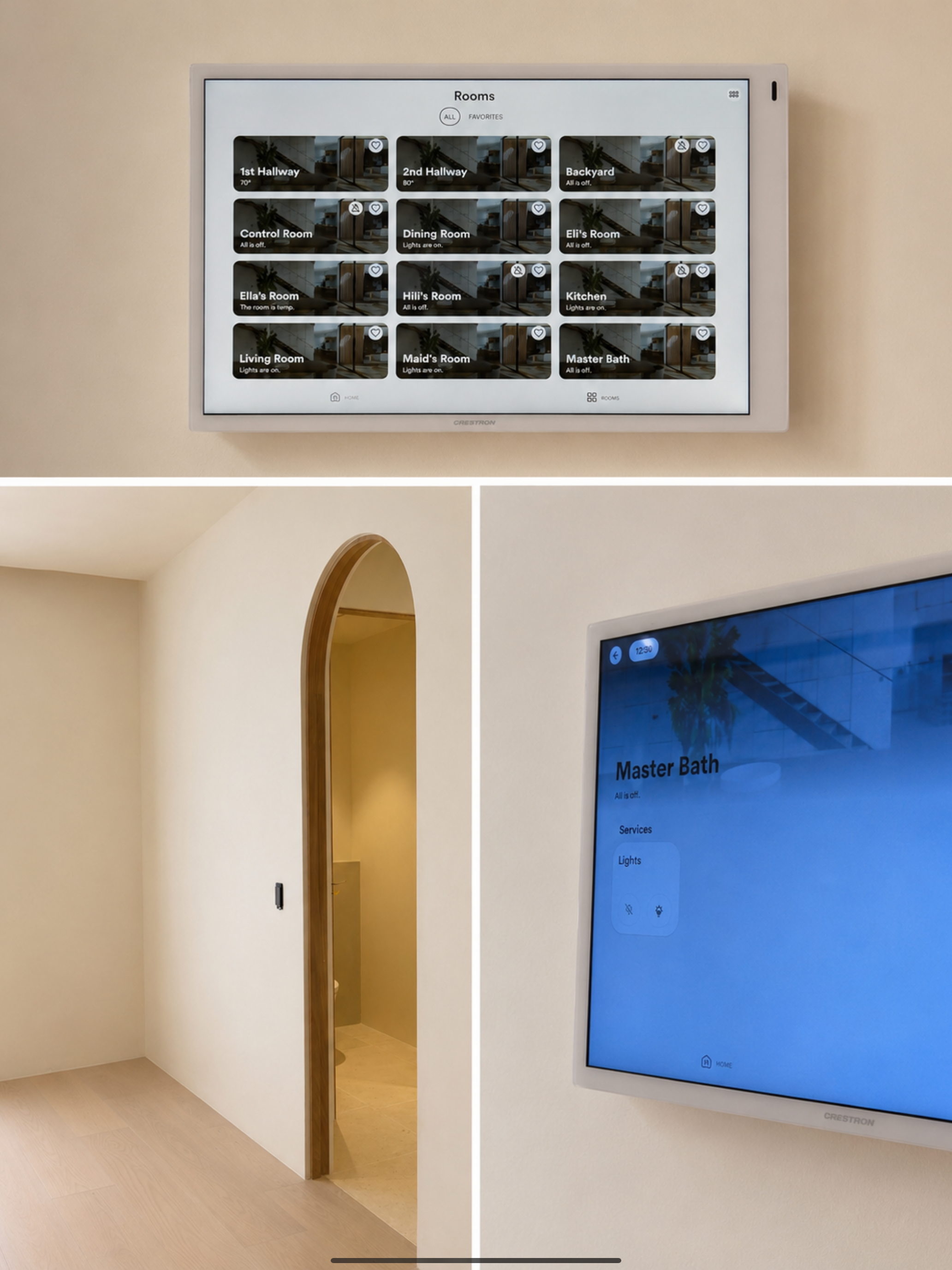
Luxury homes are getting smarter but the technology is becoming less visible.
Rather than covering walls with control panels and screens, homeowners increasingly want technology integrated quietly into the architecture.
Lighting controls, automated shades, climate systems, speakers, security, charging, and smart-home functions can all be concealed or simplified.
The best technology enhances the experience of the home without dominating its design.
15. Timeless Architecture Over Fast trends
Perhaps the biggest luxury trend of 2026 is moving away from trend-driven design altogether.
Homeowners investing in custom homes and major renovations are increasingly looking for architecture that can age beautifully.
Natural stone.
Real wood.
Balanced proportions.
Beautiful openings.
Thoughtful daylight.
Craftsmanship.
These elements have existed for centuries because they are not dependent on one design cycle.
The most successful homes may incorporate what is current but they are never completely defined by it.
What Luxury Looks Like in 2026
The defining luxury home of 2026 is not necessarily the biggest, brightest or most elaborate.
It is the one where everything feels intentional.
Materials connect naturally from room to room.
Lighting reveals the architecture.
Storage disappears into millwork.
Indoor and outdoor spaces flow together.
And every decision feels specific to the people who live there.
Luxury is becoming less about how much a home contains and more about how beautifully everything belongs together.
ENEBuilders I Luxury Design + Build in Los Angeles
At ENE Builders, we approach luxury homes as one complete design experience from architecture and interior design to engineering, permitting, construction, custom details, materials, and outdoor living.
By bringing design and construction together under one team, every element can be considered from the beginning.
One Team. One Vision. From Concept to Completion.
Planning a custom home or major remodel in Los Angeles?
Schedule a consultation with ENE Builders and start designing a home built around the way you want to live.
Ready to design your dream home in Los Angeles?
ENE Builders is a family-owned luxury design-build firm serving Los Angeles and Orange County. We specialize in Mediterranean, Spanish Revival, and Organic Modern design — from architecture through final detail.
Contact us today to schedule your consultation.
ENE BUILDERS | LA + OC | enebuilders.com | (877) 272-0139
License #1113906 · Family Owned · Design + Build · Architecture Through Detail